Start With the Risk, Not the Sign Price
Before you order anything, walk the site and note what the sign must control. A workshop in Hamilton, a retail backroom in Mangaung, and a loading bay in Kroonstad will need different messages, different sizes, and different fixing methods. Think about where people stand, how fast they move, whether machinery is noisy, and if the area is indoors or exposed to weather.
A safety sign should answer one question quickly: what must I do here? That may be stop, wear eye protection, keep out, no smoking, mind the step, or emergency exit. If the message is not clear in three seconds, the sign is not doing its job. It should be placed where the danger starts, not half way down the passage.
- Identify the hazard, such as moving vehicles, hot surfaces, chemicals, low headroom, or restricted access.
- Decide who must see it, staff, visitors, contractors, or the public.
- Check whether the sign must be temporary, fixed, or changed often.
- Measure the viewing distance so the lettering and symbol size are suitable.
Match the Sign Type to the Message
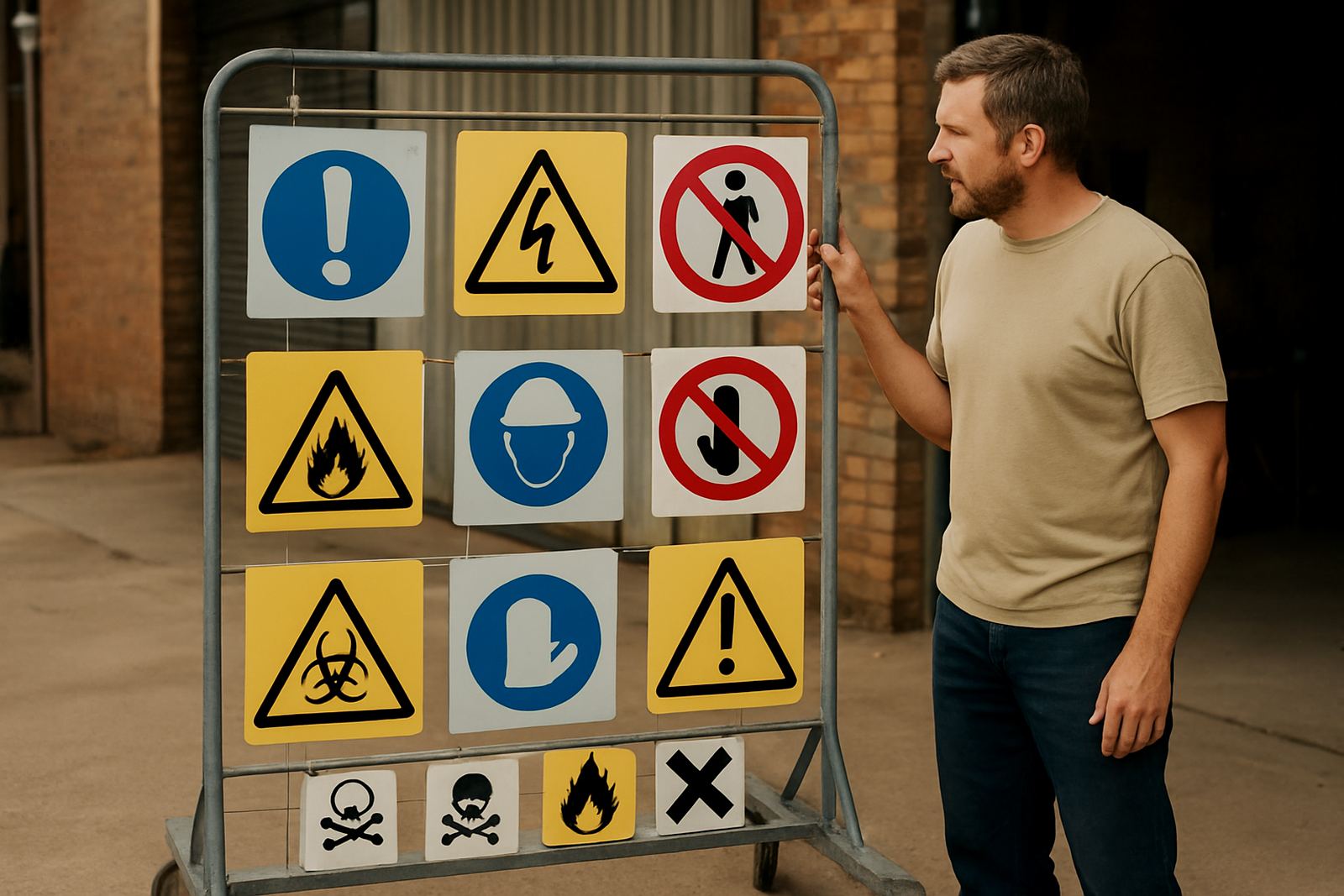
Most workplaces need a mix of sign types. Warning signs alert people to danger, mandatory signs tell people what protective gear to wear, prohibition signs stop unsafe behaviour, and emergency signs show exits, assembly points, first aid or fire equipment. Directional signs are also important in larger facilities where visitors can become confused quickly.
For example, a warehouse in Botshabelo may need forklift warning signs, pedestrian walkway markings and no unauthorised entry notices. A panel shop or fabrication area may need glove, mask and eye protection signs at the entrance, plus fire point signs near extinguishers. If you serve the public, add clearly marked toilet, exit and access route signs as well.
- Use standard symbols where possible so the message is understood at a glance.
- Keep wording short and direct, without long sentences.
- Separate similar messages so they do not compete with each other.
- Use colours consistently, such as red for prohibition and green for emergency routes.
Choose Materials That Suit Free State Conditions
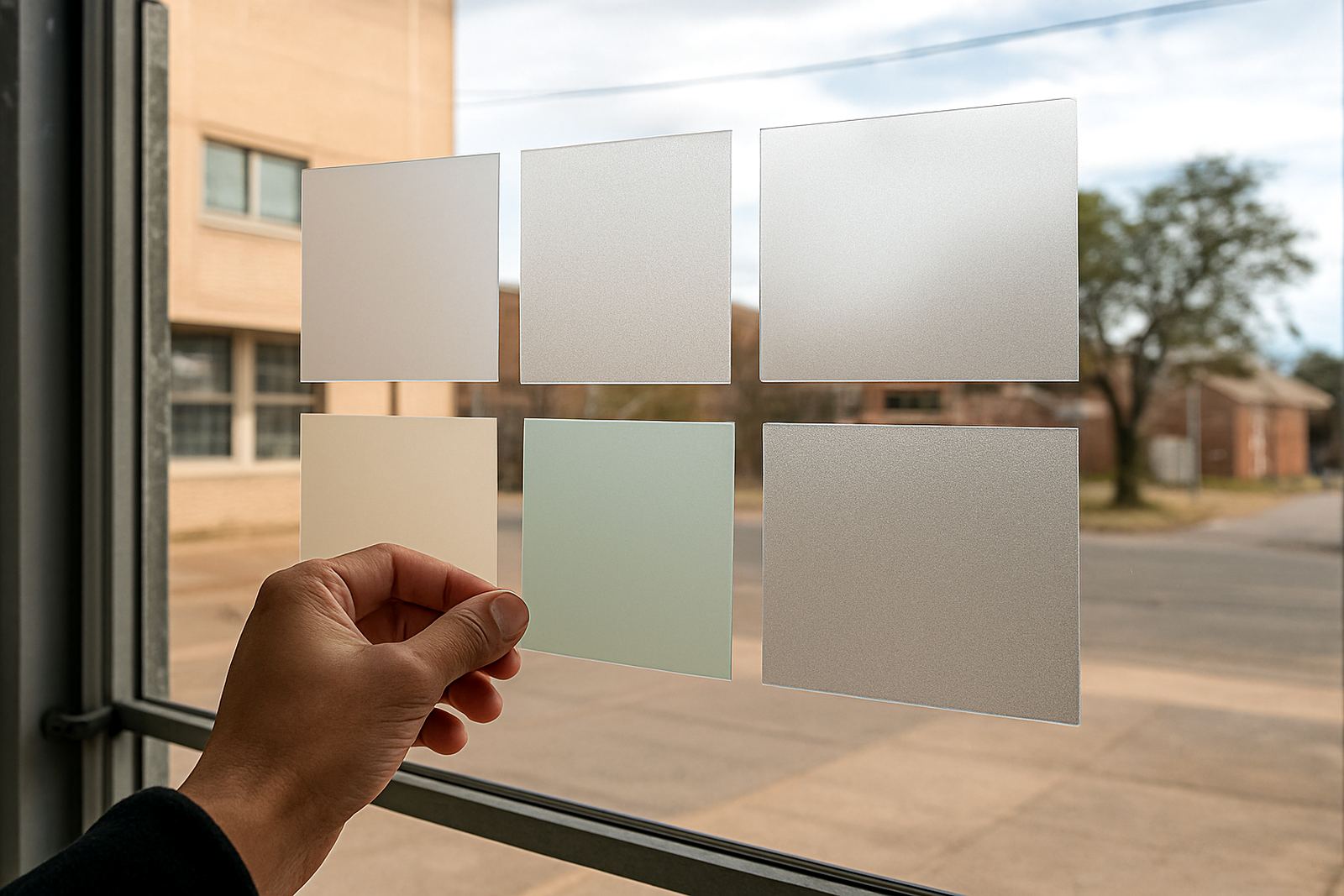
Material choice matters more than many buyers think. Indoor signs can often use rigid board or vinyl on a smooth surface, but outdoor signs in Bloemfontein and nearby towns must handle sun, wind, dust and sudden rain. Coastal humidity is not your concern here, but UV exposure and dry heat still fade poor-quality print fast. If a sign will face traffic or cleaning chemicals, ask for a finish that can handle regular wiping.
For temporary notices, a lighter substrate may be enough. For long-term safety use, choose something that will not curl, crack, or lift at the corners. Reflective or high-visibility finishes are useful where people read signs in low light, at gates, or in late shifts. In some cases, floor graphics need extra slip resistance too, especially near entrances or in production areas.
It helps to think about maintenance from the start. A sign that is easy to clean and inspect is more likely to stay legible for years, and not just a few months. We often see signs that fade on one side because they were mounted where the sun hits the same edge all day.
Get the Size, Fixing and Placement Right
Even the correct sign can fail if it is mounted badly. Position matters. A hazard sign should be visible before someone reaches the risk, not after. Mount it at eye level where possible, or above obstructions such as stacked stock, parked vehicles or open doors. For wall signs, leave enough clearance so they are not hidden by shelving, pipes or equipment.
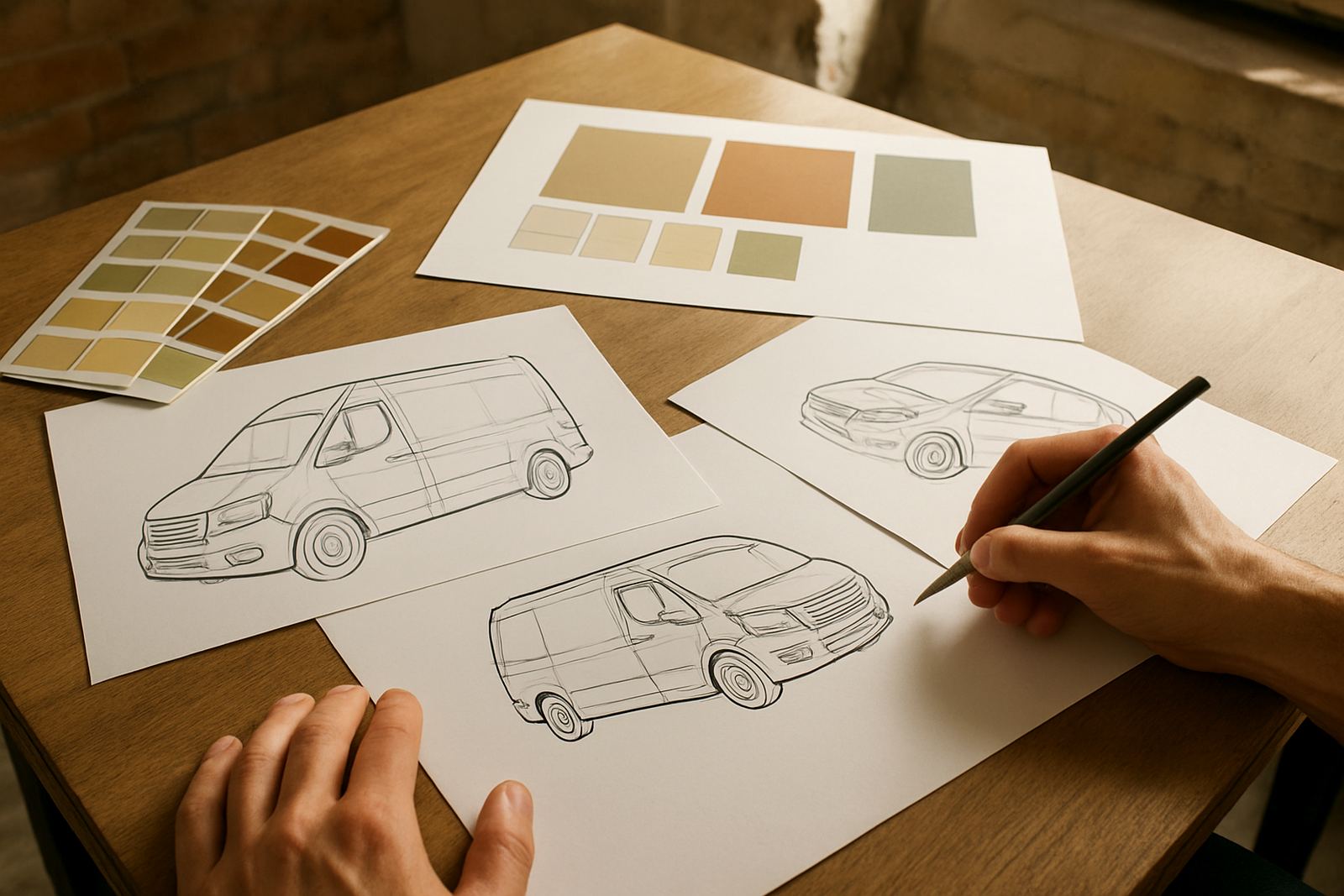
Fixing method should suit the surface. Smooth walls, painted doors, glass windows, metal sheeting and textured brick all need different preparation. In some sites, screws and stand-off fixings work well. In others, adhesive vinyl or laminated panels are better. On vehicles, the surface must be clean and dry before application, otherwise edges can lift. That matters on bakkies and delivery vans that get washed often.
- Check viewing distance and font height before approving artwork.
- Avoid placing signs behind open doors, pallets or hanging stock.
- Leave room for future maintenance, repainting or refits.
- For temporary events, make sure signs can be removed without damaging paint or glass.
Check the Artwork Before It Goes to Print
Good artwork is practical. The wording should be accurate, the spelling correct, and the pictograms easy to understand. If a site uses specific procedures, such as PPE rules, restricted entry, or fire assembly points, those details should appear exactly as needed. A small mistake can make a sign unclear, and sometimes unsafe.
This is also the stage to check logo redraws, numbering, arrows, and colour consistency across the site. If you need multiple signs for several branches, keep the style the same so visitors recognise the system. For work across Mangaung, Thaba Nchu, Welkom and Kroonstad, a consistent set of signs helps staff move between sites without confusion. It also makes later replacements simpler.
- Confirm wording, arrows, icons and measurements before production.
- Ask for a proof if the sign includes technical terms or custom instructions.
- Use the same design language across all departments and entrances.
- Keep a record of what was installed, and where, for future replacements.
Plan for Installation, Refurbishment and Ongoing Checks
Safety signage is not a once-off job. New hazards appear, layouts change, and old signs wear out. After installation, walk the site again and check that each sign can be seen from the correct approach path. If a sign has been damaged by a delivery trolley, sun, or cleaning chemicals, replace it quickly. A faded warning is almost as bad as no sign at all.
For larger premises, it helps to schedule maintenance visits. This can include sign cleaning, replacement of damaged panels, debranding old notices, or adding new graphics after a layout change. In busy workplaces, a simple yearly check is often enough to catch missing, loose or outdated signs before they become a problem. If your site has ongoing alterations, keep spare labels and directional signs on hand.
When you buy well, you save time later. The right safety sign package should help people move safely, find exits quickly, and understand rules without asking around. That is useful on any site, from a small shop floor to a full industrial yard. And yes, it should still look neat after the first hot summer.