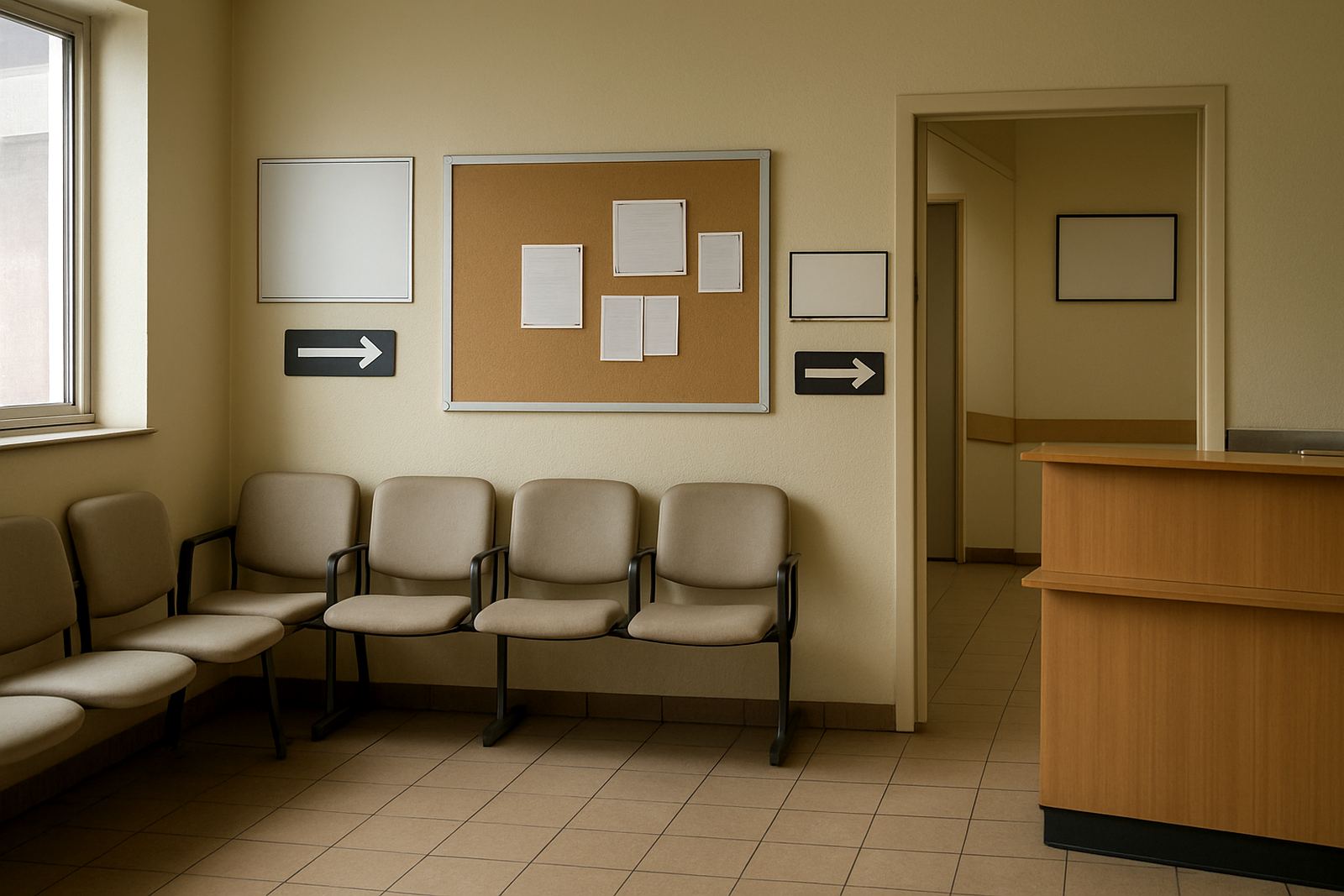
Why clinics need signs that speak calmly and clearly
A clinic is not the place for guesswork. A visitor should be able to find reception, nursing stations, toilets, treatment rooms and exits without having to ask three people. Good signs reduce the pressure on staff and help the whole building feel more orderly.
That matters just as much in a small GP practice in Hamilton as it does in a larger medical centre serving Thaba Nchu, Botshabelo or Welkom. The best clinic signs are plain, easy to read and placed where people naturally look first.
- Reception signs for the first point of contact
- Directional signs for waiting areas, consulting rooms and services
- Door signs for private rooms, staff only areas and amenities
- Safety signs for fire exits, no smoking areas and emergency routes
Reception and wayfinding signs that cut confusion
The first few steps matter. A patient arriving for an appointment should know where to park, where to enter and where to queue before they even reach the door. Clear reception signage sets the tone and helps the front area run properly during busy periods.
Inside the building, wayfinding signs need to be consistent. The same colour, same wording style and same arrow logic should be used from the entrance through to consultation rooms. If a clinic has multiple corridors or split levels, the signage needs to be planned properly so people are not walking back and forth in silence with a file in hand.
- Use large lettering for room numbers and department names
- Keep arrows simple and direct, not crowded with extra text
- Place signs at eye level where people stop, turn or choose a route
- Use durable finishes that stay readable under cleaning chemicals and daily handling
Privacy, compliance and room identification
Healthcare spaces need privacy, and signage plays a part in that. A well marked consulting room or treatment room reduces the chances of someone walking in by mistake. It also helps visitors respect restricted areas without needing repeated reminders from staff.
In South Africa, clinics also have to think about practical compliance. Exit markings, emergency information and accessible routes should be visible and maintained. In a busy facility in Bloemfontein or Kroonstad, faded labels and peeling door signs can create avoidable confusion. That is why clinic signage should be made for regular cleaning, frequent use and indoor lighting that may change through the day.
- Door signs for consultation rooms, pharmacy, admin and records
- Private and staff only notices for controlled access areas
- Emergency exit and safety notices that remain legible during load-shedding
- Accessibility signs for wheelchair access, ramps and dedicated toilets
Exterior signs that help patients find the right entrance
Many clinics lose time before the appointment even begins. If the outside sign is too small or placed too high, visitors may not know they are in the right place. A clear exterior sign on the building facade, boundary wall or entrance gate gives immediate confidence.
For a clinic facing a busy street in Mangaung or near a shared medical complex, exterior signs also need to stand up to sun, dust and winter cold. If the site is exposed to wind, a banner or panel must be fixed properly so it does not flap, sag or become unreadable. We often see that a simple, strong sign with the clinic name and entrance direction does a better job than something overcomplicated.
- Building name signs for the main frontage
- Entrance signs for patient drop off and pedestrian access
- Directional signs for parking bays and after-hours access
- Window graphics for opening times, service lists and privacy screening
Waiting areas, counters and internal signs that reduce pressure
Inside the clinic, the waiting area should feel organised, not noisy. Signs can help with queue flow, hygiene reminders and patient information without staff needing to repeat the same instructions all day. Good graphics can also make a plain room feel less harsh, which matters in places where people are already anxious.
At the counter, smaller signs can support daily operations. A sign for forms, payments, collection points or referrals keeps the front area moving. In some clinics, printed labels on drawers, shelves and storage doors are just as important as the main signs because they help staff find supplies quickly during a busy shift.
- Queue management signs for reception and triage
- Hygiene notices for hand washing and mask rules where needed
- Directional stickers for collection, dispensing and exit points
- Window decals that add privacy while still letting in natural light
A Bloemfontein clinic example and what to choose for lasting value
A family clinic in Bloemfontein may need a mix of exterior panels, door labels, wall graphics and floor markings to make the whole place easier to use. If the practice serves patients from Botshabelo, Thaba Nchu and surrounding areas, the signs must work for people who may be visiting for the first time and not know the building layout at all. That means clear wording, sensible placement and finishes that can cope with daily cleaning and regular traffic.
For most clinic projects, the smart choice is not the fanciest option. It is the option that stays readable, easy to clean and easy to update when rooms change or services move. Central Signs handles site surveys, artwork setup, print production, vinyl cutting, sign fabrication and installation, so the final result fits the building and the way the clinic actually works.
- Choose materials that can handle sunlight, moisture and cleaning products
- Ask for signs that can be updated when departments change
- Use consistent colours and wording across the whole premises
- Plan for maintenance visits so worn signs do not build up over time