
Choose signs that do the job without fighting the lease
Rentals need a different mindset from owner-occupied premises. You want signage that brings in foot traffic, helps couriers find the place, and gives the business a proper face to the street, but you also need to protect the deposit and avoid arguments with the landlord. In Bloemfontein that often means working with a building in a centre, a sectional title block, or a stand-alone property where the lease spells out exactly what can and cannot be fixed to the walls.
The best place to start is with the lease and a site survey. Check whether drilling is allowed, whether fascia boards can be used, and if there are rules for illuminated signs, wind loading or hours of light. Many landlords are fine with temporary or semi-permanent signs if the mounting is neat and the surface can be restored later. That is where removable panels, vinyl graphics and freestanding items make sense.
- Use clamp-on or bracket-mounted signs where possible.
- Keep drilled fixings to a minimum and record every hole.
- Choose materials that can be removed without damage or staining.
- Match the sign size to the frontage so it fits the lease and the site.
Best low-permanence options for shops and offices
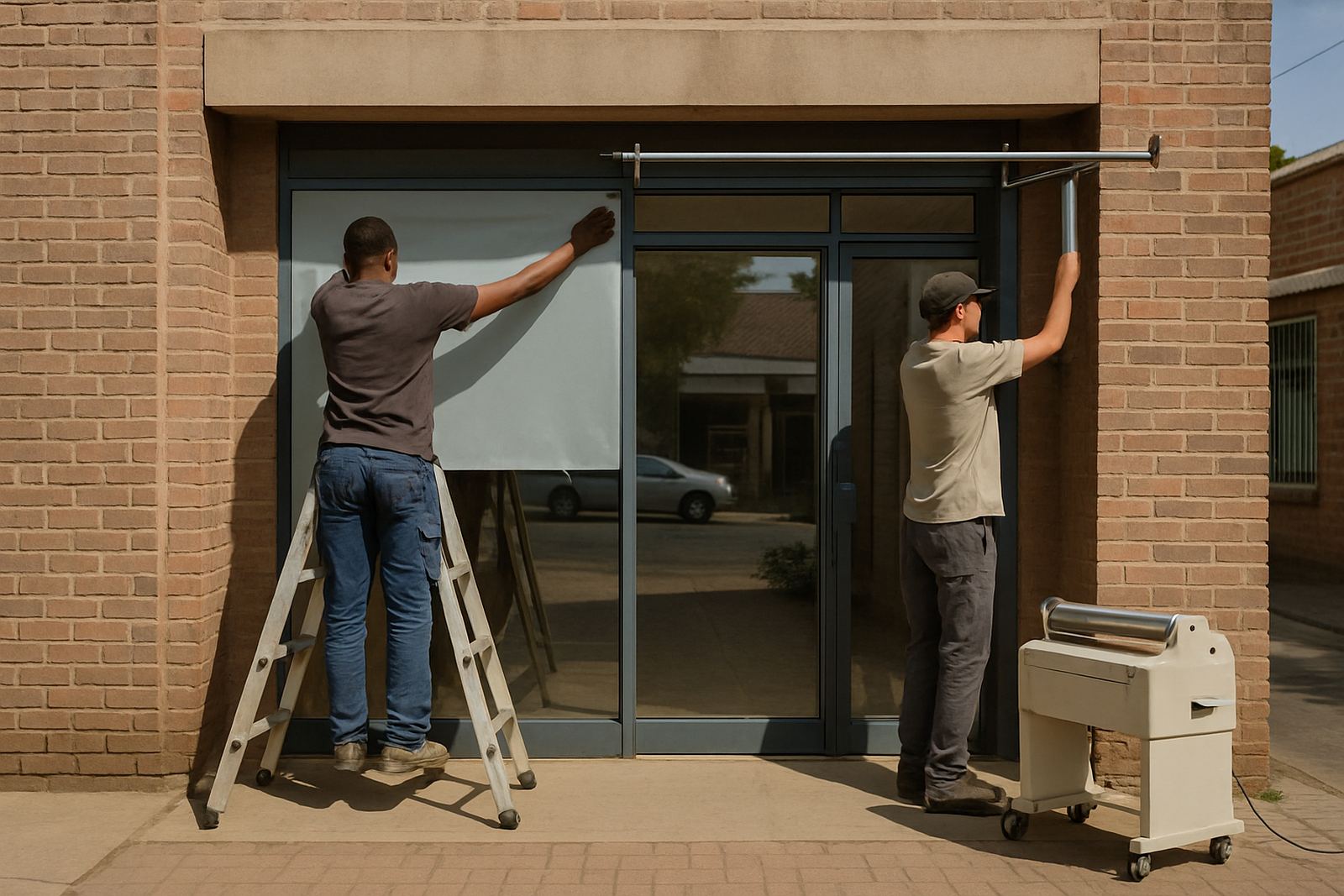
For rentals, a few sign types give strong visibility without locking the tenant into a permanent installation. Window decals are often the easiest win. They carry trading hours, logos, opening specials or privacy film, and they can be removed later with the right adhesive cleaner. On glass fronts in areas such as the CBD, Tempe or near busy access roads, this can be enough to create a clean branded look without touching the building fabric.
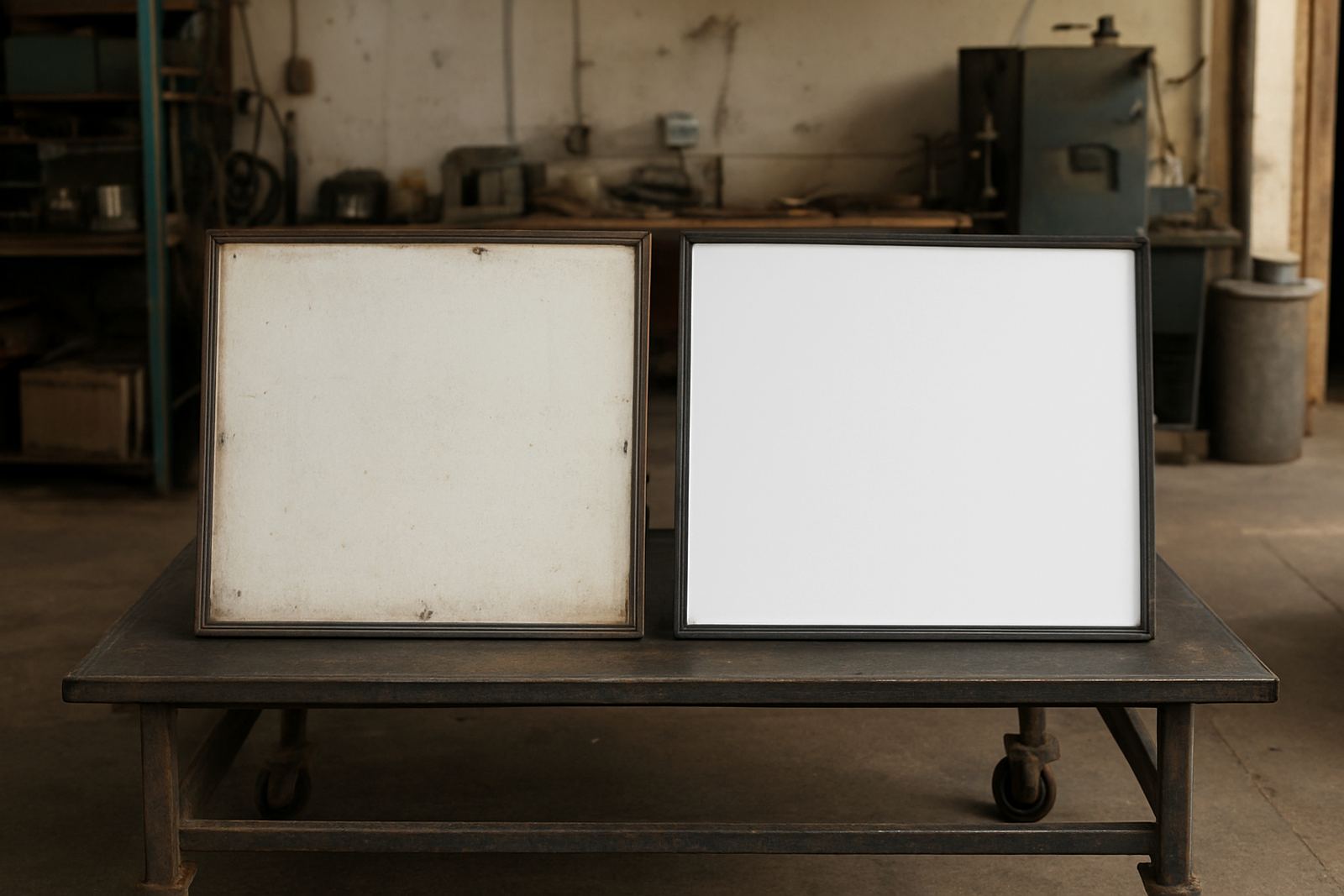
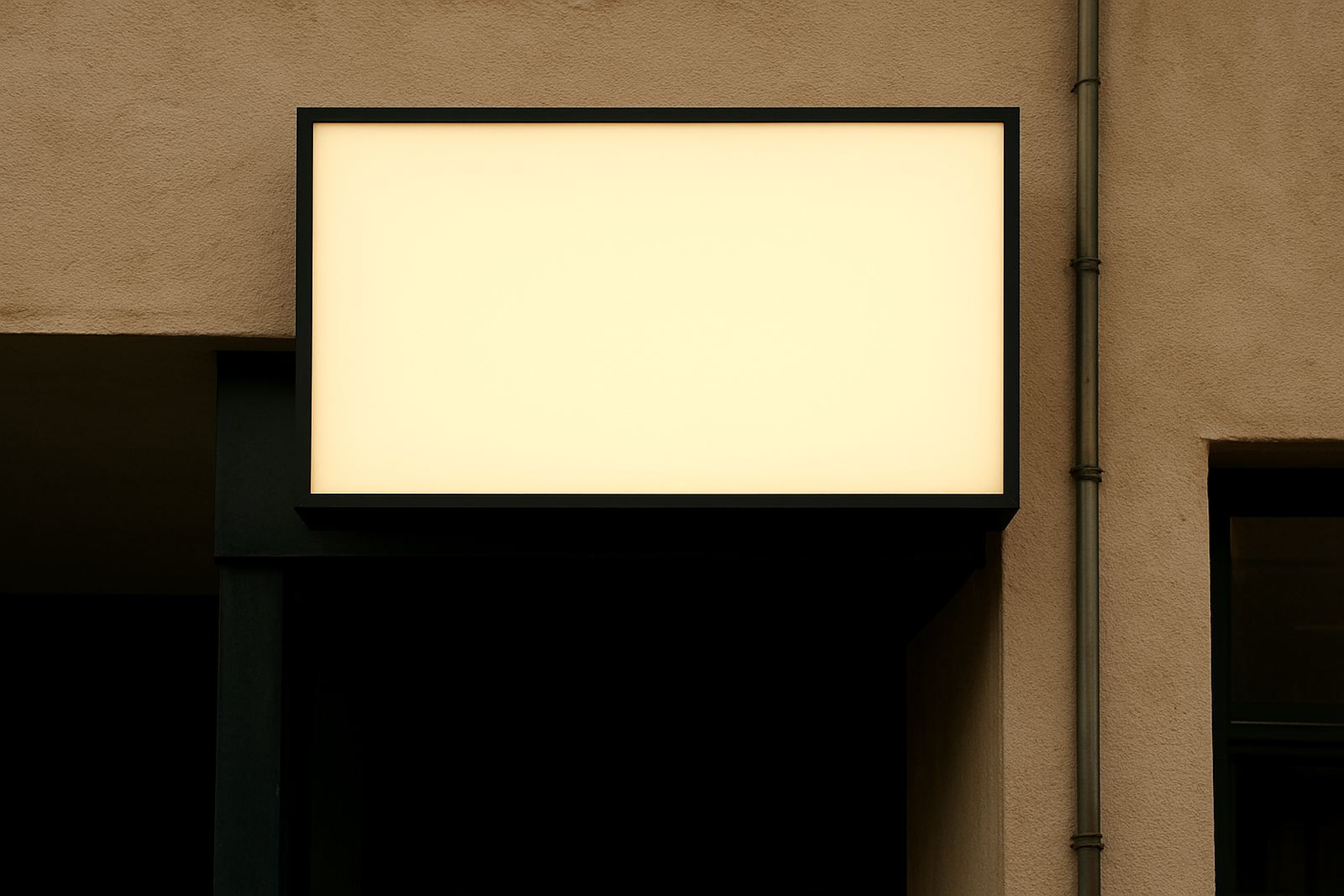
Another useful option is a removable board sign. These can be made as aluminium composite, PVC or other lightweight panels and fixed to existing frames or brackets. They are useful for pop-up retail, short leases, medical rooms and office suites. If the landlord allows it, a face panel over an existing frame can refresh an old sign box without replacing the whole structure. It is a good fix when the property owner wants the building kept tidy, but the tenant still needs their own identity up front.
- Window decals for trading hours, logos and privacy.
- Removable board signs for fascias and entrances.
- Interior directional signs for reception and suites.
- Temporary banners for openings, specials and relocations.
Vehicle graphics when the building is not enough
Some rental sites have limited frontage or shared parking, so the sign has to move with the business. Vehicle graphics are often the smartest rental solution because they travel with you when the lease ends. For plumbers, electricians, mobile cleaners, small retailers and delivery services in Bloemfontein, a branded bakkie or panel van does more work than a fixed sign alone. It also helps when trading from a warehouse or yard where the street address is not very visible.
We often set up vehicle lettering, partial wraps and removable door graphics for businesses that may relocate within a year or two. The key is to keep the artwork clear and the install tidy. On older vehicles or work fleets exposed to Free State sun, the vinyl must be applied properly and checked for edge lift. If a sign needs to come off later, it should come off without chewing the paint, which is why the surface prep and film choice matter so much.
For business owners in Mangaung, Botshabelo or Thaba Nchu, this can be a practical way to keep brand continuity across different premises. The building may change, but the vehicle stays in service and keeps earning its keep.
How to avoid damage when the lease ends
A good rental sign is not only about how it looks on day one. It is also about how the site will look when you leave. In windy Bloemfontein weather and in dusty trading areas, poor fixings can leave marks, cracked holes or stained paint. That can cost a tenant money at handover. Before anything is made, it helps to plan the removal as carefully as the installation.
That means using fixing methods that suit the surface and keeping a record of where each item is attached. On painted walls, some adhesive systems are fine if they are used correctly, but they must be tested first. On glass, the wrong film can leave residue or pull at the tint. On cladding or plaster, heavy signs should be spread across a wider fixing area so the surface does not fail under load. If the landlord is strict, ask for a written sign-off before production starts. It saves a lot of back-and-forth later, and it keeps the relationship civil.
- Photograph the site before installation and after removal.
- Keep all fasteners, trims and labels noted for the exit report.
- Use reversible fixings where the surface allows it.
- Plan a debranding visit before the final month if needed.
Getting the message right for passing traffic
Rental signage has to work quickly. People passing on foot or by car often only get a few seconds to notice the business, read the name and understand what is being sold. That is why clear wording matters more than clever copy. Keep the main sign simple: business name, what you do, and one strong contact point such as the entrance or parking side. Too much text becomes a blur at traffic speed.
In shopping strips and light-industrial areas, the sign also needs to help people find the right door. Directional decals on glass, floor graphics at the entrance and wall wayfinding inside can all be made as removable items. This is especially useful in shared buildings where several tenants operate from one property. If a courier cannot find the loading bay or a customer misses the reception door, the signage is not doing its work. A good layout reduces those daily interruptions and gives the place a more organised feel.
Local conditions matter too. Coastal humidity is not the issue in Bloemfontein, but sun exposure, dust and strong wind can still wear out weak materials. A well chosen rental sign holds its colour and remains readable, even after months of hard weather.
A Bloemfontein rental example that makes practical sense
Consider a small business moving into a leased unit in Hamilton, Bloemfontein. The landlord allows signage, but only if the walls are not permanently altered and the frontage stays neat for the next tenant. The business needs visibility from the road, clear door identification and something on the vehicle so customers can find them during load-shedding or after dark. A sensible package would be a removable fascia panel, a set of window decals, interior directional labels and a branded vehicle set that can move with them if the lease ends sooner than expected.
That kind of approach also suits businesses serving Mangaung, Welkom or Kroonstad from one base. The sign package does not have to be grand. It just has to be readable, compliant and easy to manage. If the property changes in two years, the branding does not have to be thrown away. It can be lifted, re-used where possible, and updated without disrupting trade. That is where rental signage pays for itself: it supports the business now, and it does not become a headache later.
For tenants, the real win is having a sign that looks like it belongs there, even if the building itself is temporary. That balance is what makes a leased site feel settled and open for business.