What a site board does on a working site
A site board gives people the basic facts at a glance. It tells the public who is on site, what is being built, who the main contractor is, and where visitors or delivery drivers should report. On busy roads or municipal projects, it also helps with compliance and makes a site look organised from day one.
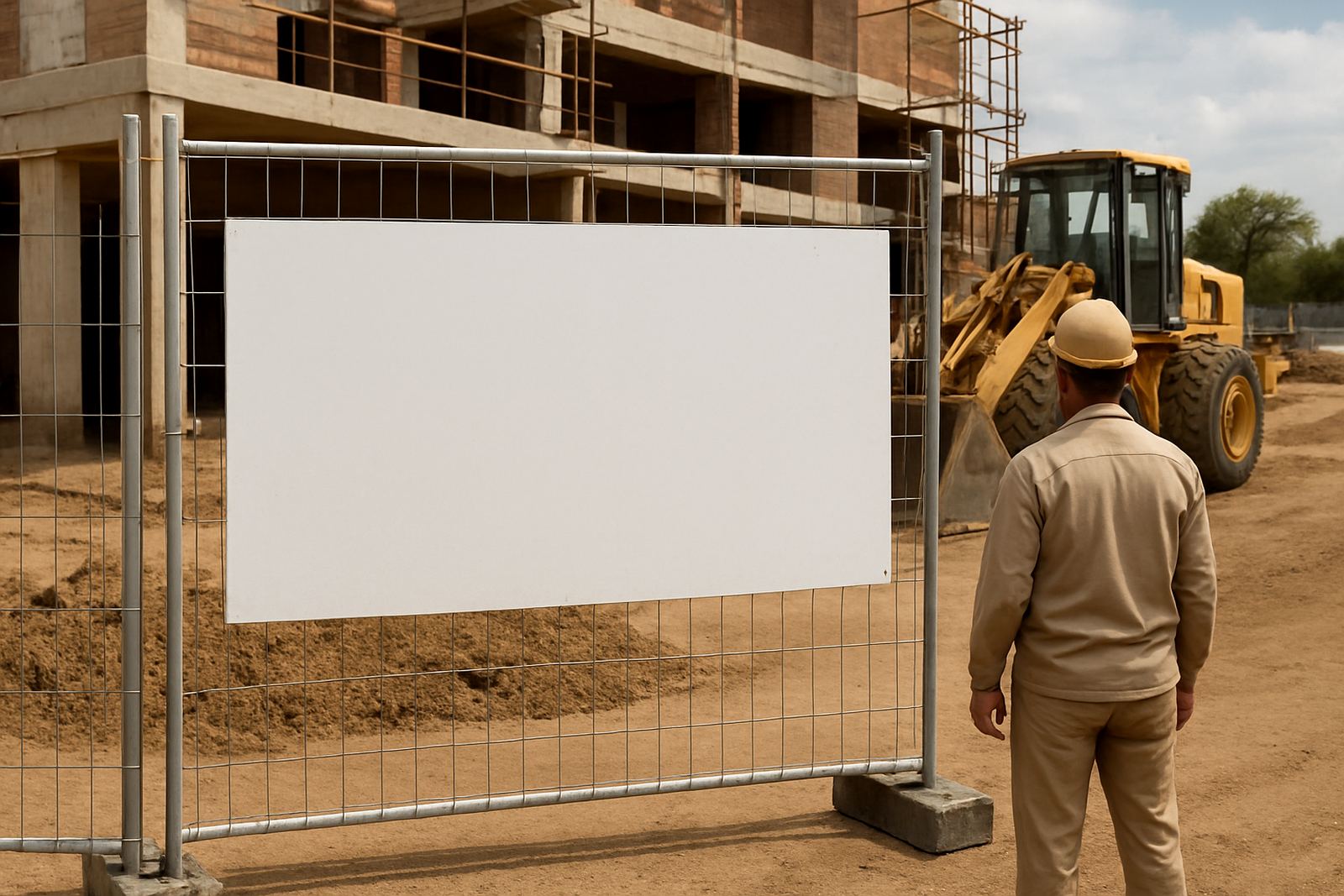
We produce boards for boundary lines, access gates, temporary hoarding and site entrances. These can carry project names, contact details, safety notices, emergency information, permit references and directional arrows. On a windy Free State site, the difference between a flimsy sign and a properly made board shows quickly, especially on open plots and roadworks.
- Project identification and contractor details
- Direction to reception, security or delivery points
- Safety notices and PPE reminders
- Temporary branding for developments and civil works
Board sizes, materials and print finishes
Most site boards are made to suit the gate, fence line or hoarding panel rather than one fixed size. Common board sizes include 1 200 x 800 mm, 1 800 x 1 200 mm, 2 400 x 1 200 mm and 3 000 x 1 500 mm, with larger custom boards for main entrances or roadside visibility. We can also split oversized boards into panels for easier handling and install.
Material choice depends on how long the board must last, how much wind it will face and whether it is a short term or long term project. Foamed PVC works for lighter indoor or sheltered use, aluminium composite suits cleaner long-life boards, and galvanised steel or framed panels are better for exposed construction sites. Printed graphics are usually finished with UV-stable laminate for extra life in strong sun. For hoarding, we can do full colour print, cut vinyl lettering or a mix of both. A matt finish helps reduce glare in direct sun and looks neater for project photos too.
- Light duty: 3 mm foamed PVC or similar panel
- Medium duty: 3 mm to 5 mm aluminium composite
- Heavy duty: framed board or steel-backed panel
- Print options: full colour, vinyl cut lettering, reflective detail, matt or gloss laminate
Where site boards work best
Site boards suit building sites, civil works, demolition jobs, warehouse yards, housing developments and public works where access needs to be controlled. They are also useful at temporary entrances, on site offices, against hoarding panels and on fences facing passing traffic. In Mangaung, many sites sit in open conditions with dust and strong wind, so placement matters as much as the board itself.
We often recommend boards at two points: one at the main access gate and one at the pedestrian or delivery entrance. For larger developments, a second board can carry detailed wayfinding or safety rules. If the site is near a road, the text must be large enough to read from a slow moving vehicle. For night visibility, reflective elements or external lighting can help, especially where load-shedding affects site power.
- Construction sites and project entrances
- Hoarding and fence lines
- Delivery, security and visitor access points
- Temporary closures, detours and safety notices
Installation, fixings and power requirements
Installation depends on the surface. Boards can be fixed to palisade fencing, brick walls, timber frames, steel posts or hoarding panels. For free-standing boards, we can fabricate a frame and set posts into concrete. On windy corners or open stands, the fixing method is as important as the print, because a loose board damages fast and can become a hazard.
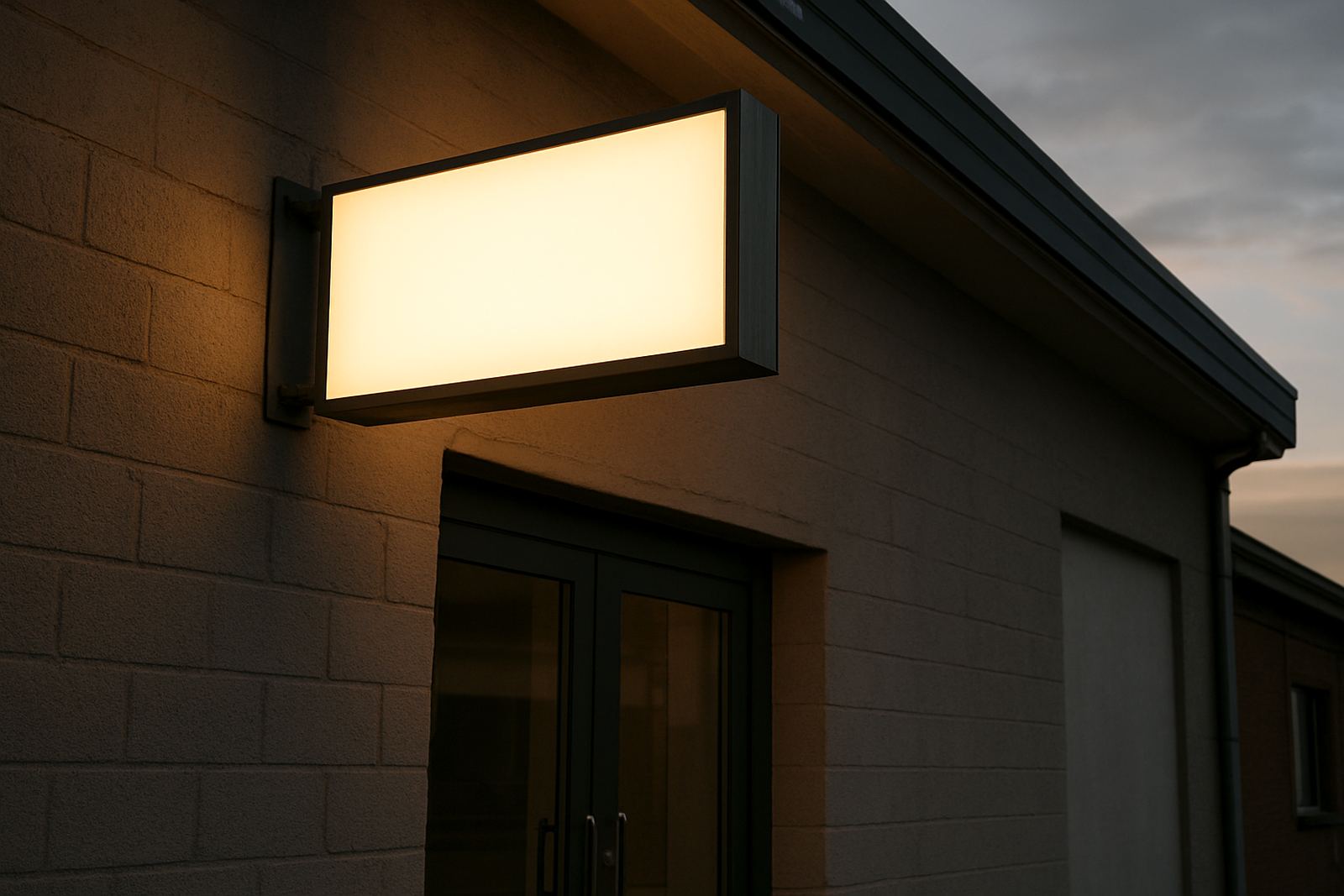
Most site boards do not need power. If you want illuminated lettering, light boxes or a lit entrance sign, then a power point, cable route and weatherproof connection point must be planned before installation. In many cases we suggest keeping the main board non-electrical and using separate lighting if needed, since site power is often temporary and unreliable during outages. Where the board must stand near gates or moving vehicles, we will check clearance, height and visibility before fitting it. A quick site survey saves rework later.
- No power needed for standard printed boards
- Power only needed for illuminated or backlit signs
- Fixing options include screws, brackets, stand-offs, posts or welded frames
- Site survey recommended for entrances, corners and uneven ground
Care, cleaning and ongoing servicing
Site boards work hard. They collect dust, builder's residue, road grime and sometimes overspray from nearby work. A soft cloth, mild soap and clean water is usually enough. Avoid harsh solvents on printed faces because they can dull the laminate or lift cut vinyl edges. On coastal or humid sites, check for rust at fasteners and brackets, and on dusty inland sites make sure the board is not rubbing against sharp wire or loose fencing.
If a project runs for months, plan on a quick maintenance visit now and then. We can tighten fixings, replace damaged sections, refresh faded graphics and swap out boards when contractor details change. Debranding and rebranding are also common when a site changes hands or a project phase ends. A board that is straight, clean and readable reflects well on the contractor as much as on the developer.
- Wash with mild soap and water only
- Check brackets, screws and post movement after strong wind
- Replace cracked panels or faded print before they become untidy
- Schedule maintenance visits for long-term projects
What to check before you place an order
To make the right board first time, it helps to have a few details ready. Tell us where the board will go, how big the available space is and whether it must be fixed to a wall, fence or freestanding frame. If the board is for a municipal or regulated site, we also need to know if there are size limits, wording rules or safety notices that must be included.
You should also decide who the board is for. A main entrance board needs clear project and contractor details, while a hoarding panel may need bigger branding and less text. If the board must be seen from traffic, the letter sizing and colour contrast matter more than fine detail. If you already have a logo or layout, send it through. If not, we can sort out the artwork setup, redraw the logo if needed and prepare it for print production. That way the finished board matches the site and does not look crowded.
- Exact board size or the space available
- Mounting surface and whether posts or frames are needed
- Text to include, including project name and safety information
- Any site rules, municipal requirements or branding guidelines
Key facts
| Standard sizes | 1 200 x 800 mm, 1 800 x 1 200 mm, 2 400 x 1 200 mm, 3 000 x 1 500 mm, custom sizes available |
|---|---|
| Materials | Foamed PVC, aluminium composite, galvanised steel, framed panels, hoarding panels |
| Finish options | Full colour print, cut vinyl lettering, reflective detail, matt or gloss laminate |
| Mounting | Wall fixed, fence fixed, stand-off brackets, posts, welded frames |
| Power needs | None for standard boards; power only for illuminated or backlit signs |
| Service areas | Bloemfontein, Mangaung, Botshabelo, Thaba Nchu, Welkom, Kroonstad, Brandfort and Winburg |