Start with the parts of the yard people read first
In a workshop, the first signs should do more than look tidy. They need to tell people where to park, where to report, where to wait and which areas are staff only. In Bloemfontein and the wider Mangaung area, many yards have mixed traffic all day, from technicians and deliveries to customers dropping off equipment. Clear entrance signs and simple directional boards cut down on confusion straight away.
For larger yards in places like Botshabelo or Welkom, the message should be visible from a moving bakkie as well as on foot. That usually means bold lettering, strong contrast and short wording. A sign that says Reception, Loading Bay, No Entry or Workshop Entrance is often more useful than a long sentence. If the gate opens onto a busy road, a second sign a few metres inside the property can help drivers slow down and turn safely.
- Entrance signs for gates and boundary walls
- Directional signs for reception, loading and parking
- Safety notices for no smoking, PPE and restricted zones
- Hours of trade boards for client facing areas
Use wall graphics to organise the working space
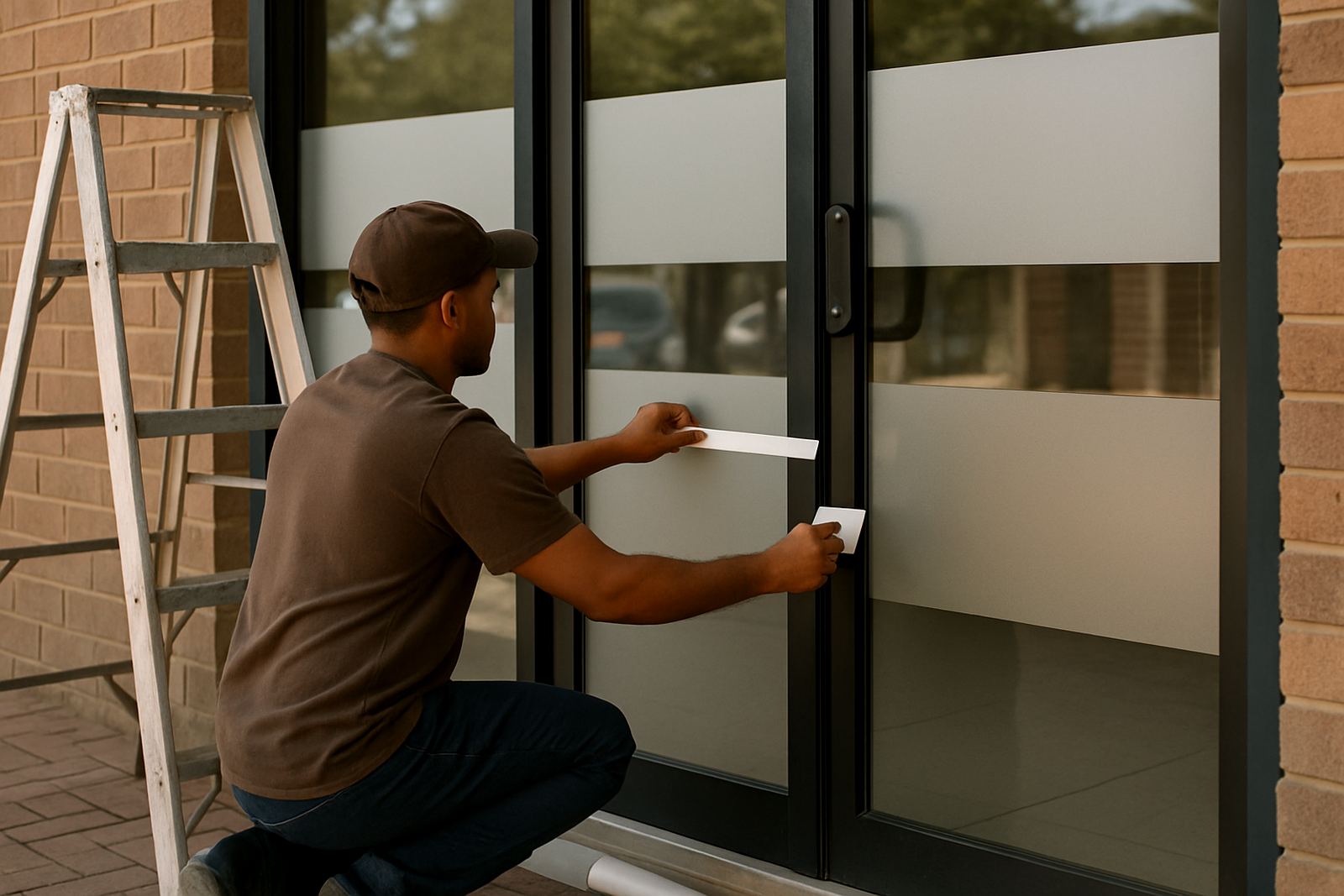
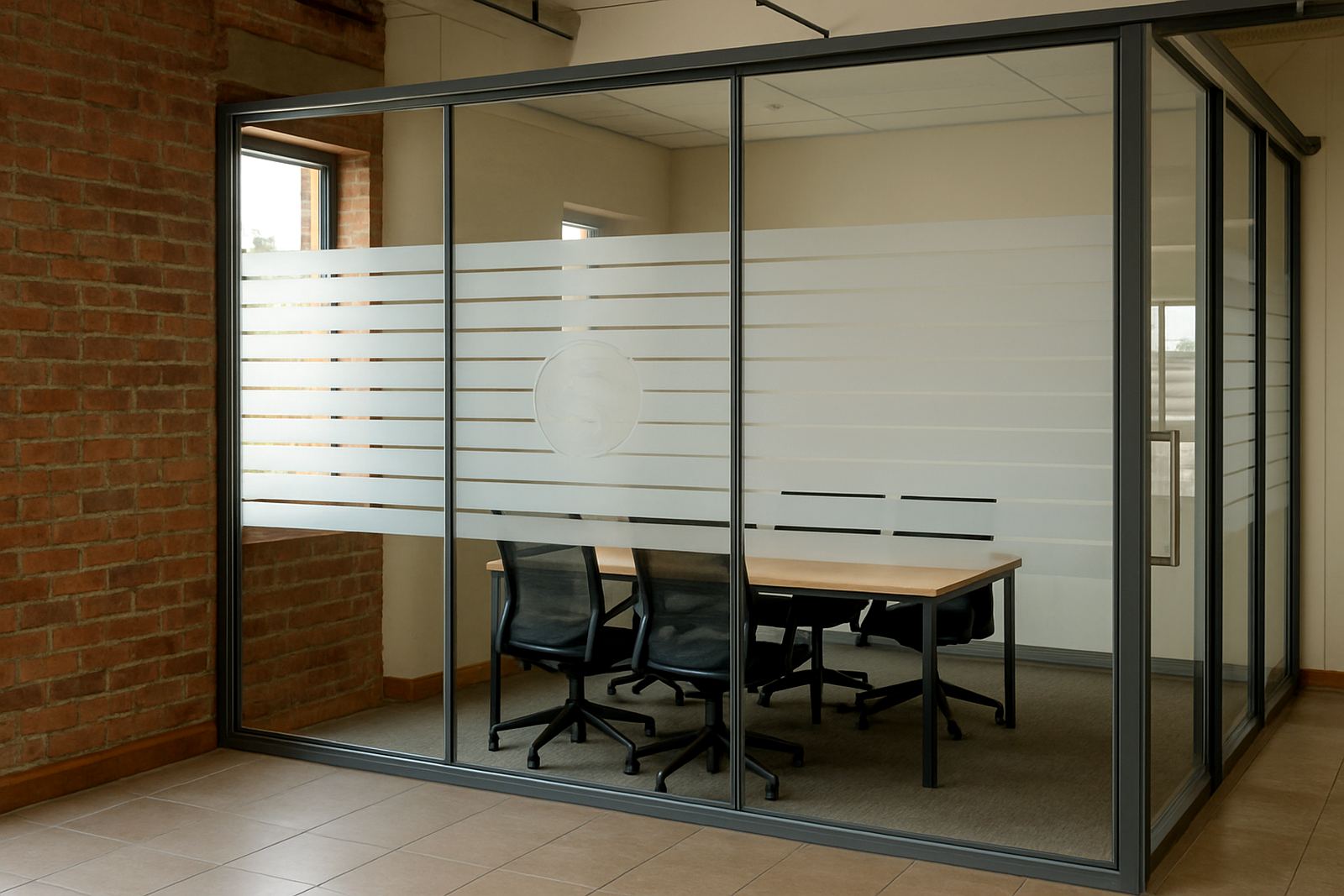
Workshop walls can do useful work. Instead of leaving blank surfaces to gather dust, they can carry equipment labels, process steps, hazard markings and department names. A clean wall graphic also gives a better impression when a customer walks in for a quote or collects a finished job. That matters in trade yards where the office, fabrication area and storage space are all close together.
In a service yard, wall graphics can show the flow of a job from intake to inspection, repair, testing and release. This helps new staff settle in faster and it makes the place easier to supervise. Vinyl wall markings are useful on painted block walls, smooth panels and steel cladding, and they can be replaced when the layout changes. In dusty areas, it is worth choosing a finish that cleans off without leaving a sticky edge behind.
- Department names for fabrication, spray, stores and admin
- Process boards for job stages and handover points
- Equipment labels for tools, bins and storage racks
- Health and safety reminders near machines and exits
Floor markings make movement safer and quicker
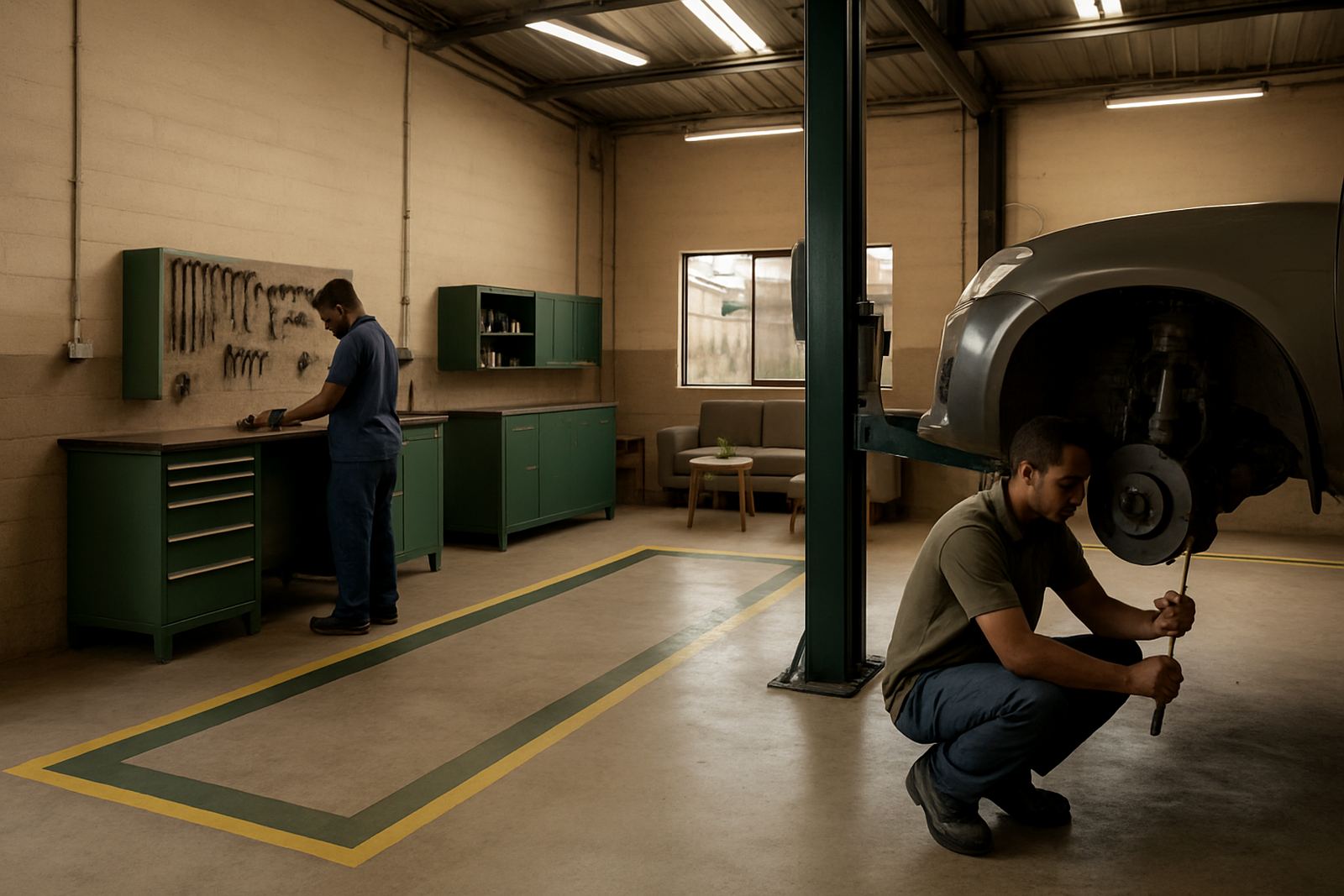
Floors are often the most overlooked branding surface in a workshop. Yet they carry the clearest traffic routes for people, pallets, trolleys and vehicles. Floor decals and marked lines help separate pedestrian routes from forklifts, indicate waiting points and guide customers away from live work areas. In a busy yard, that can reduce mistakes and save time every single day.
For outdoor or semi covered service areas, the floor finish must suit local conditions. In Bloemfontein, dust and foot traffic can wear cheap markings quickly. In coastal parts of the country, moisture can be an issue, but here in the Free State the bigger concern is abrasion and regular cleaning. A well installed floor graphic should handle scrubbing, tyre movement and daily use without lifting at the edges.
Good floor marking uses plain language and strong shapes. Arrows, stop points, waiting boxes and numbered bays work well because they are understood at a glance. If the yard is used for fleet vehicles or customer collections, the marked bays can also help with parking control and reduce congestion around the gate.
Bays, doors and storage need their own labels
Once the main movement areas are sorted, the next step is to label the smaller working zones. Doors, cupboards, chemical stores, parts racks and lock up areas all benefit from clear signage. This is where many workshops lose time. Staff waste a few minutes searching for items and that adds up across a week. A proper labelling system keeps the space organised and makes stock control easier.
Vehicle service yards, fabrication shops and printing workshops each need different kinds of labels. Some areas only need a simple printed name, while others need warning text, asset numbers or instructions. Labels should be durable enough to handle grease, heat and repeated wiping. In a workshop with good naming, visitors can find the right bay without asking three different people, which helps keep the place running smoothly.
- Bay numbers and department names
- Lockable cabinet labels and shelf markers
- Chemical and warning labels for storage areas
- Asset and inventory labels for tools and parts
Fleet and vehicle branding carry the workshop beyond the gate
For service businesses, the vehicle is often the moving face of the company. Once a bakkie leaves the yard, the sign on the side keeps advertising through Mangaung, Thaba Nchu, Brandfort or Winburg. It also helps customers identify the right vehicle on arrival, which is useful in estates, business parks and rural delivery routes. Simple graphics on doors, tailgates and canopies can make a vehicle look ordered and professional without overloading it with detail.
Vehicle branding should be planned with the body shape in mind. Door handles, fuel caps, curves and trims all affect the layout. Good artwork setup matters because a logo that looks fine on a computer screen may need redrawing for the real panel size. For fleets, the same layout can be adapted across several vehicle types so the whole team looks consistent on the road and on site. Kagiso Moeketsi on the Central Signs team handles this kind of application work daily, including debranding and replacement graphics when vehicles are sold or reissued.
Where vehicles are parked overnight, it helps to add reflective or high contrast markings so the branding still reads at dawn and in poor light. That is especially useful for early starts and winter mornings when visibility is low.
Make the workshop look ready for clients and inspectors
Many trade yards are judged in the first minute. A neat sign on the gate, a labelled reception point and a tidy set of wall notices can change how people view the whole business. It suggests that the same care used on signage will be used on the job. That matters for landlords, contractors, insurers and municipal inspectors, who often pay attention to basic order as part of compliance.
For sites in Bloemfontein and the surrounding towns, it is worth combining branding with practical notices. Fire point signs, emergency exit markers and contractor rules can be designed so they fit the rest of the space instead of looking like afterthoughts. Annelie Botha often coordinates these jobs so the site survey, artwork setup and installation are handled in the right sequence. That keeps disruption down and helps the yard stay open while the work is being done. The final result looks better and functions better too, which is what most owners want.
Plan for maintenance, replacement and future changes
Workshop branding should be built for use, not just for opening day. Signs get knocked by moving equipment, stickers wear out, and layouts change when a business adds bays or changes its workflow. That is why regular maintenance visits matter. A small replacement now is cheaper than leaving a faded sign in place for years.
When planning a branding package, it helps to think in layers. Start with the gate and direction signs, then add walls, doors, floor markings and vehicle graphics. This makes the rollout easier for the team and gives the business room to grow. In some cases, the best result comes from a mix of fabrication, printed panels, vinyl cutting and sign refurbishment rather than replacing everything at once. Central Signs works from Hamilton in Bloemfontein and serves the wider Free State with practical sign solutions for trade yards, service spaces and workshop fronts. Marius Jacobus van Rensburg and the team have seen that the most useful signs are the ones people notice without having to stop and read them twice.
For a busy workshop, good branding is not decoration. It is part of the daily flow of work, from the gate to the final handover.