Why door decals work better than crowded windows
A clear door decal does one thing well: it gives the needed information exactly where people are looking. That might be a room name, opening times, a safety notice, a directional arrow or a simple privacy message. On glass doors, the mistake is to try fit too much text into one panel. The result is hard to read from a metre away and often looks untidy from the street.
Readable door decals are especially useful in offices, clinics, schools, body corporate buildings and retail spaces where visitors do not always know where to go. In Bloemfontein, where the sun can hit east-facing glass hard in the morning, the right layout and film choice matter too. Too much ink on a full-glass panel can make the door feel heavy, while a well planned decal keeps the entry light and usable.
What makes a decal easy to read at a glance
Good readability starts with contrast, spacing and size. A thin script font may look attractive on a screen but it can disappear once it is on tinted glass or behind a reflective surface. The safest approach is a clean typeface, bold enough for distance and set with enough breathing room around the words.
- Use short wording, such as Reception, Private, Staff Only or Boardroom.
- Keep the main message at eye level, usually around 1400 mm to 1600 mm from the floor.
- Allow generous margins so the decal does not sit edge to edge.
- Choose a finish that stays visible under bright light and interior lighting.
- If the door swings both ways, place the message where it will be seen before the handle is reached.
For larger entrances, a combination of logo, room name and one small line of guidance often works better than a block of text. It keeps the door information visible without crowding the glass.
Picking the right material for Bloemfontein conditions
Door decals are not all the same. Some are intended for short term promotions, while others need to hold their colour and shape for years. For busy entry doors, laminated vinyl is a sensible choice because it handles cleaning, hand contact and daily movement better than basic print alone. If the door gets strong direct sun, the film should also be suited to heat and UV exposure.
In Free State conditions, dust and dry air are common, and many premises still deal with load-shedding that affects access control and lighting. A decal that remains visible in both daylight and low light is useful. For frosted or privacy areas, translucent options can soften the view without making the door feel closed off.
Where the space has humid cleaning routines, such as medical or hospitality settings, the adhesive and finish need to cope with regular wiping. That applies just as much in a small office in Hamilton as it does in a bigger site in Mangaung.
Layout ideas that keep glass useful, not cluttered
Glass can do more than carry information. It can still let light through, help people orientate themselves and keep the entrance feeling open. The trick is to decide what the door must say and what can be left out. A decal for a consulting room does not need a paragraph. A training room does not need the whole policy statement on the glass.
Practical layout options include:
- A single line of text with a room number below it.
- A logo near the top and service name beneath, leaving the centre clear.
- One main panel for the message and a smaller strip for hours or contact details.
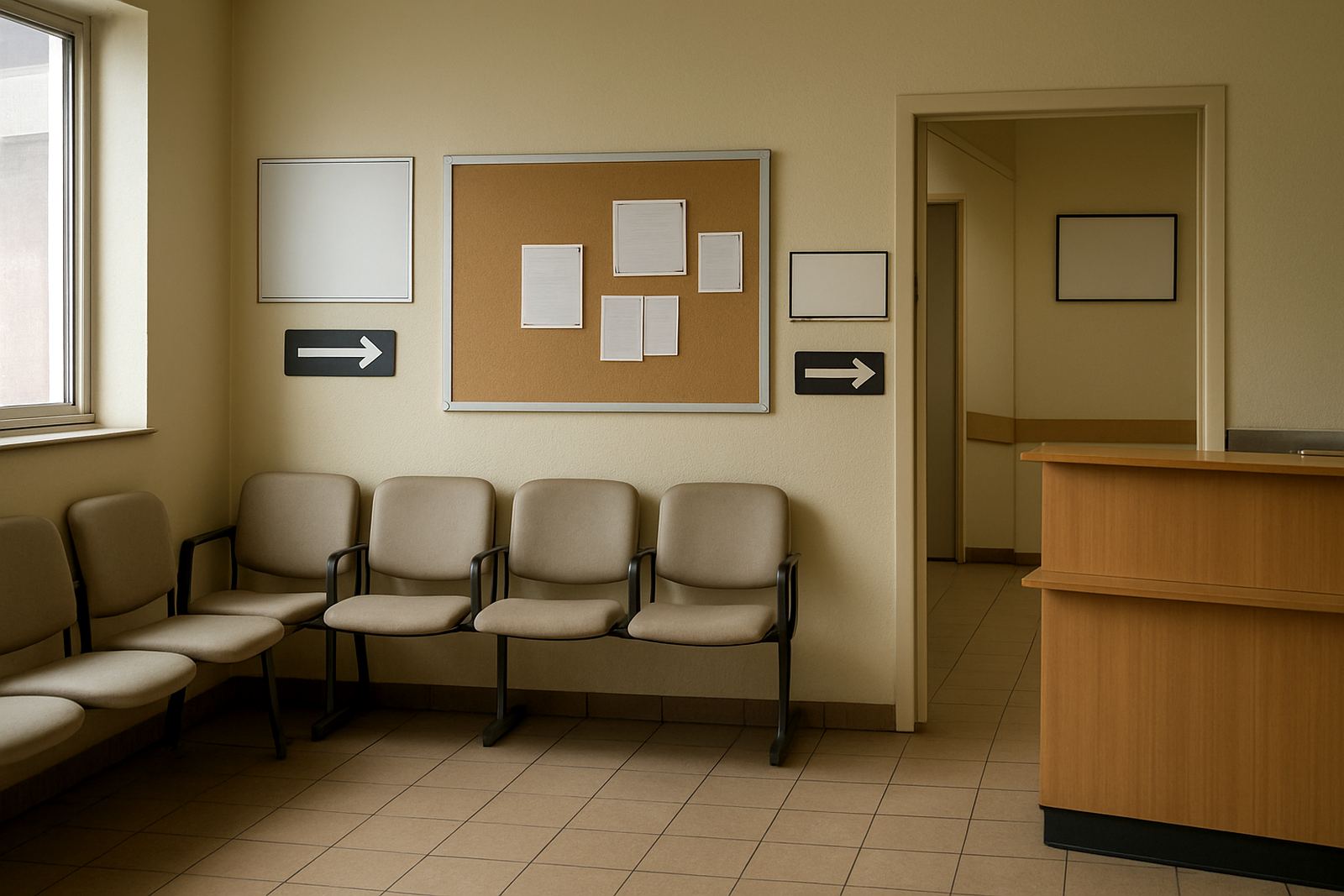
- Minimal wording on the door itself, with extra directions on the side panel or wall.
That split approach helps in shared premises, because people can find the right door without every pane carrying a full block of information. It also makes later updates easier when a department changes name or a room gets repurposed.
A local example from a busy entrance in Mangaung
Consider a small professional suite in Bloemfontein where two tenants share a front entrance and both need privacy, room identification and a bit of branding. If every door is covered in separate notices, the front area starts to feel cramped. Instead, the main glass door can carry a simple welcome line and building name, while each internal door gets a clear room decal with the tenant name, opening direction and a small symbol if needed.
This approach works well for places serving Mangaung, Botshabelo or Thaba Nchu where visitors may arrive under time pressure and do not want to stand in a corridor reading fine print. One clear decal on each door saves front office staff from answering the same question all day. It also looks more considered, which matters for clients and suppliers walking in for the first time.
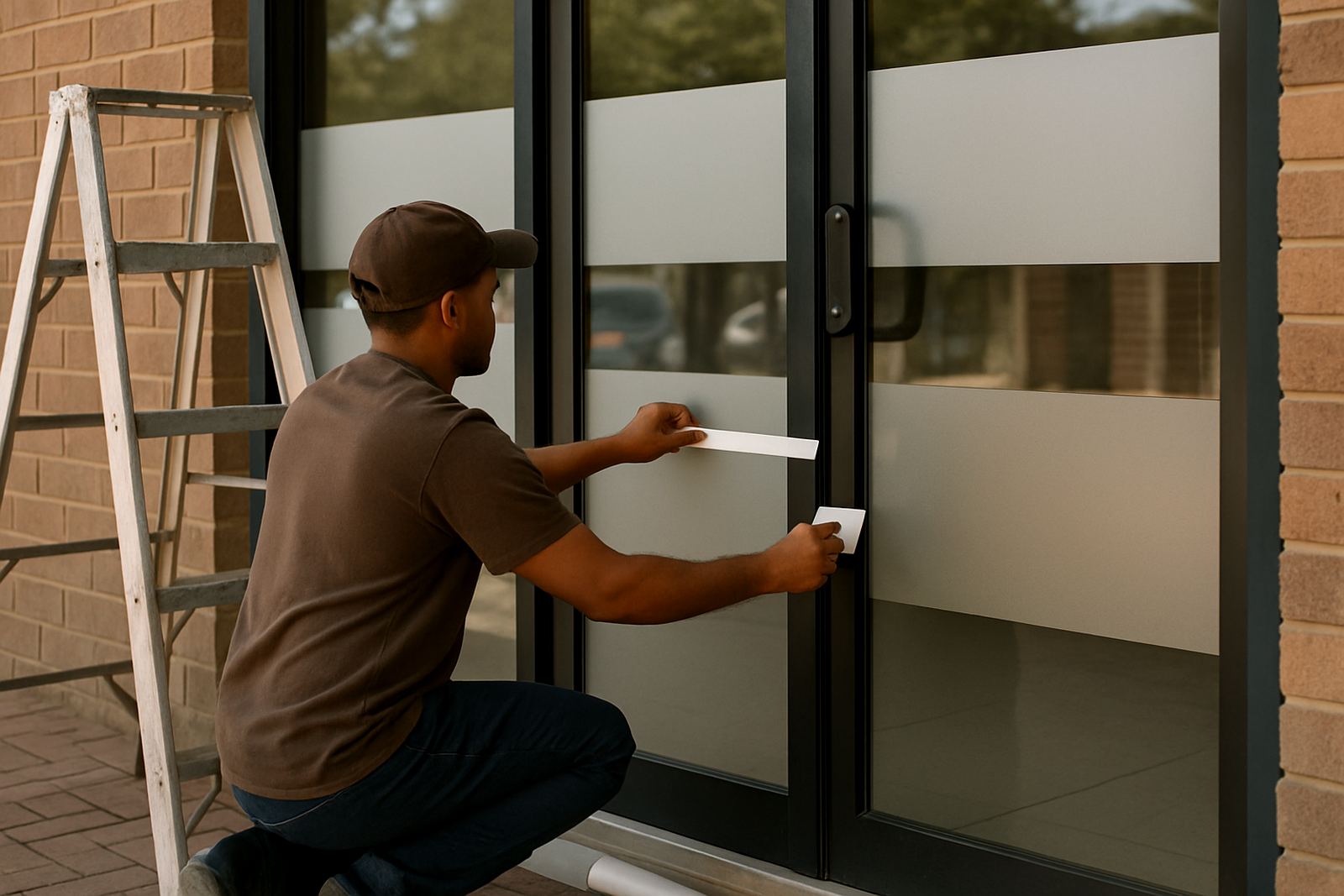
In one recent setup, a reception door got a frosted strip at eye level with the word Reception in bold lettering, while the lower section stayed open for visibility. The result was tidy and practical, and it did not overload the glass with information.
Installation details that affect the final result
Even the best decal can look poor if it is badly applied. Door surfaces need to be clean, dry and free from polish or residue. Measurements must account for handles, locks, hinges and any safety film already on the glass. If the door is not square or the frame is slightly out, the artwork should be adjusted before cutting begins.
That is where careful site surveys and print preparation matter. A good installer will check how the door moves, where people stand when they approach and what sunlight hits the panel during the day. They will also plan for maintenance, because a decal that sits on a heavily used door may need refreshing later. In commercial spaces across Welkom and Kroonstad, this practical check saves a lot of rework.
- Measure the visible area, not just the glass size.
- Check the opening side and swing direction.
- Allow for door hardware and safety markings.
- Confirm the message is readable from the normal approach path.
- Choose a finish that can be wiped down without lifting at the edges.
Keeping information current without replacing the whole door
One of the main advantages of door decals is that they can be updated without changing the door itself. If a room changes function, a new name can be applied and the old one removed. If a business has monthly promotions or seasonal notices, the decal format can be repeated with small wording changes. That is useful for schools, training venues and offices that manage several rooms at once.
For landlords and body corporates, this is a practical way to keep common areas consistent. Instead of patchy handwritten notices, the building can use one style across doors, glass panels and wayfinding signs. It keeps the property easier to manage and gives visitors a cleaner experience from the entrance onwards.
Readable door decals do not need to shout. They just need to say the right thing, in the right place, and leave the rest of the glass to do its job.