Start with the surface you are cleaning
Not all sign vinyl is treated the same, so the first step is to know what you are wiping down. A printed shopfront decal, a cut vinyl logo on a glass door, and a wrapped vehicle panel each need the same general care, but the pressure, cloth and cleaner should change a little depending on where the vinyl is fitted.
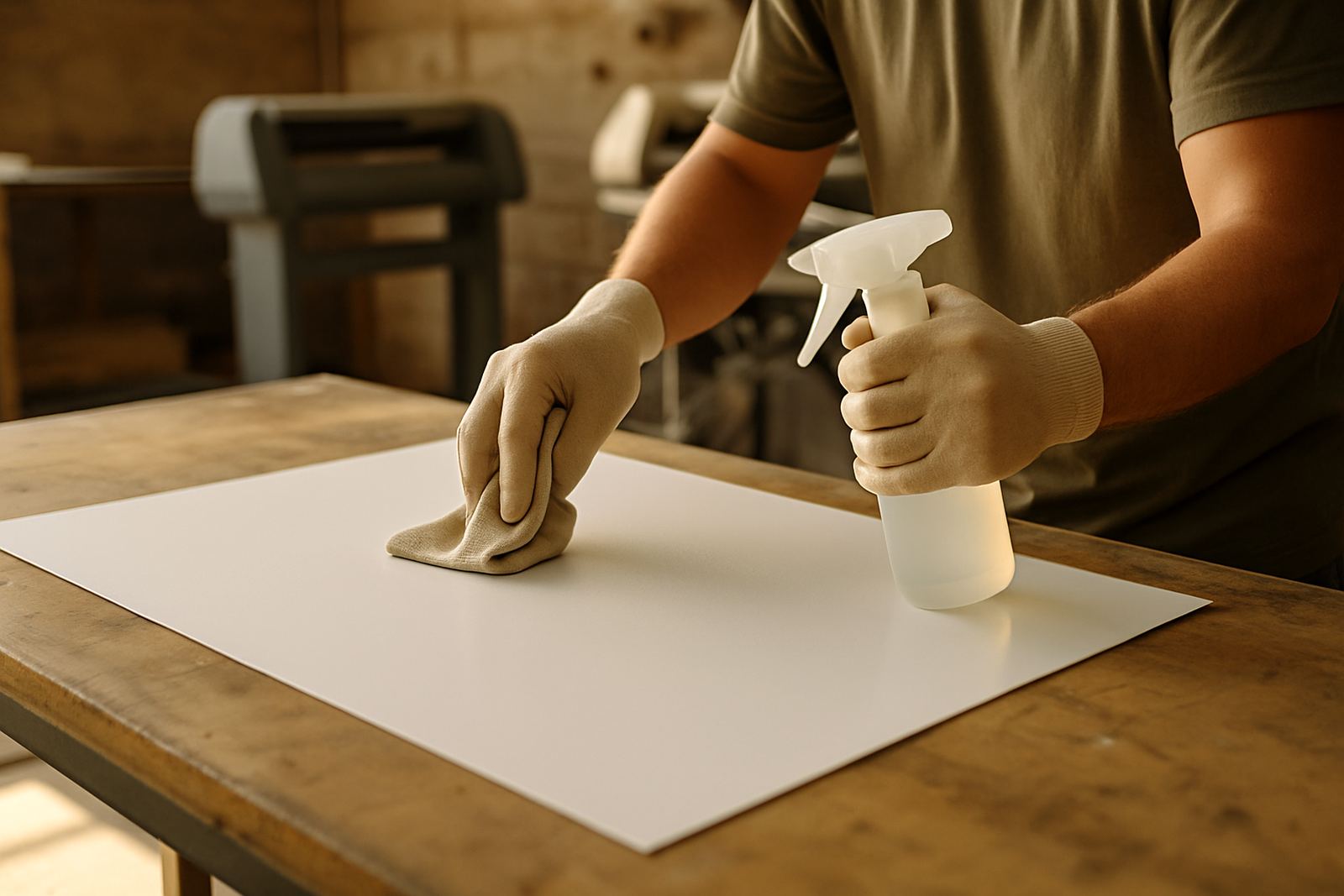
For most indoor and outdoor vinyl graphics, the safest routine is simple: dust off loose grit first, use clean water with a mild soap, then dry with a soft cloth. Grit is what scratches the print when you rub too hard. If the vinyl is on a door or window that gets handled daily, it may need a light clean more often than a sign that only catches road dust.
- Loose dust and sand should be removed before any wiping.
- Use soft microfibre cloths, not rough rags or scourers.
- Test any cleaner on a small corner first if you are unsure.
- Do not scrub at lifted edges, bubbles or cracked areas.
What to use and what to avoid on printed vinyl
The safest cleaner is usually lukewarm water with a small amount of gentle, pH neutral soap. That keeps the print clean without attacking the laminate or adhesive. Strong degreasers, thinners, solvents and abrasive powders can dull the finish, soften the print or lift the edges. That risk is even higher on older vinyl that has already spent a few summers in direct sun.
In practice, many cleaning problems come from using too much force rather than the wrong product. A soft cloth used twice is better than one hard rub with a scratched sponge. If the sign is on a painted wall, a textured board or a powder coated frame, keep the cleaning product controlled so it does not pool at the joins.
- Safe choice: mild soap, clean water, soft cloths.
- Avoid: petrol, paraffin, acetone, thinners and harsh degreasers.
- Avoid: abrasive pads, steel wool and stiff brushes.
- Use a light touch around seams, corners and cut letters.
How to clean shopfront signs without lifting the print
Shopfront vinyl is often exposed to hand marks, dust, insects and the odd splash from cleaning the glass around it. For signs on windows, walls and doors, the trick is to clean the vinyl as part of the whole surface, not as if it is a separate patch that can be scrubbed hard. That keeps the finish more even and reduces patchy wear.
When the sign is fitted at eye level or near a busy entrance, clean from top to bottom so dirty water does not run over the already cleaned area. If there is a printed banner or sticker on a window, support the area with your hand while wiping so the material does not flex too much. On frosted or clear glass decals, use a damp cloth first to loosen dirt, then dry straight away to avoid streaks.
- Clean in shade where possible so soap does not dry too fast.
- Wipe in one direction for a more even finish.
- Dry the edges well, especially if rainwater collects there.
- If a corner starts lifting, stop and arrange a repair before it peels further.
Vehicle graphics need a gentler hand than most people think
Vehicle vinyl takes a beating from dust, tar spots, road grime and fuel splashes, especially on routes between Bloemfontein, Mangaung, Botshabelo and Thaba Nchu. Even a well applied vehicle wrap or decal can be damaged by a pressure washer held too close, or by a brush wash with hard bristles. The aim is to clean off dirt without forcing water under the film.
Wash vehicles in a cool part of the day and keep the nozzle at a sensible distance. Pay attention to edges, handle recesses and around badges where water can get trapped. If the vehicle has been on gravel roads or has picked up fine sand, rinse first before wiping. That small step helps avoid fine scratches that show up badly on darker prints.
- Rinse loose dirt off before touching the vinyl.
- Keep high pressure water away from lifted edges.
- Dry corners and joins so water does not sit there.
- Avoid scraping off bird droppings or tar with a blade.
Free State weather, load-shedding and daily wear
Bloemfontein has dry dust, winter cold and strong summer light, and each of those affects how vinyl looks over time. Dust settles quickly on exterior signs, then the sun bakes it in if it is left too long. In summer, a sign can be hot to the touch by midday, which means cleaning too aggressively can leave marks. Coastal humidity is not the issue here, but sudden rain and dust together can leave a gritty film on panels and window graphics.
Load-shedding can also play a small part in sign care. When lights are off after dark, external signs may not be seen as clearly and cleaning crews sometimes miss scuffs or stickers that need attention. A routine maintenance visit helps catch those issues before they turn into bigger problems. For shops in Hamilton, Mangaung and the broader Bloemfontein area, regular wipe downs every week or two often keep the print looking presentable for longer.
- Clean earlier in the day or in shade to avoid heat marks.
- Check for dust buildup after windy days.
- Inspect illuminated signs after outages or storms.
- Do a quick monthly review of edges, joins and colour fade.
When cleaning is not enough and refurbishment makes sense
Sometimes the vinyl is past the point where cleaning will make a proper difference. If the colour has faded, the laminate has cracked, or the edges are lifting across several metres, replacement or refurbishment may be the better call. That is especially true for branded vehicles and shop signs where the look of the print affects how the business is seen from the road.
A sign can often be repaired or refreshed before it becomes a full replacement job. Debranding, partial rework, new overlaminate, or fresh print panels can all be more cost effective than leaving damaged vinyl in place. For local businesses in Welkom or Kroonstad that want to keep their frontage neat through the year, a planned refresh is usually easier than waiting until the graphics look tired and patchy.
If you are unsure whether a sign should be cleaned, repaired or replaced, look at the edges first. Once a laminate starts cracking or lifting, cleaning will only buy a little time. That is the point where proper sign advice saves money in the long run and avoids a messy finish.