When glass needs more than a logo
Glass looks clean, but it also causes problems. A shop front can be too open, a partition can feel exposed, and a glazed door can be easy to walk into if it is left unmarked. That is where decals earn their keep. They are a practical way to add identity, privacy and direction without replacing the glass itself.
For many businesses in Bloemfontein, decals are the first fix when a space needs to look finished fast. A pharmacy may need frosted bands for privacy. An office in Hamilton may want simple door markers and room names. A retail shop in Mangaung may need trading hours, promotions and opening messages that can be changed as stock changes. The right choice depends on how much light you want to keep, how much of the glass must stay visible, and how often the message will change.
At Central Signs, we usually start with the glass itself. Size, exposure to sun, and whether the surface is inside or outside all matter. South African heat and dust can shorten the life of poor material, and on west-facing windows the adhesive and print need to cope with strong afternoon sun. A decal that looks good in the morning and curls by summer is not doing its job.
The main decal types and where each one fits
Different glass areas need different finishes. A shop window is about visibility and impact. An office partition is about light and privacy. A glazed door is about safety and clear movement. One material does not suit every job, and that is usually where projects go wrong.
- Clear printed decals: Best when you want graphics on glass but still need the background to show through.
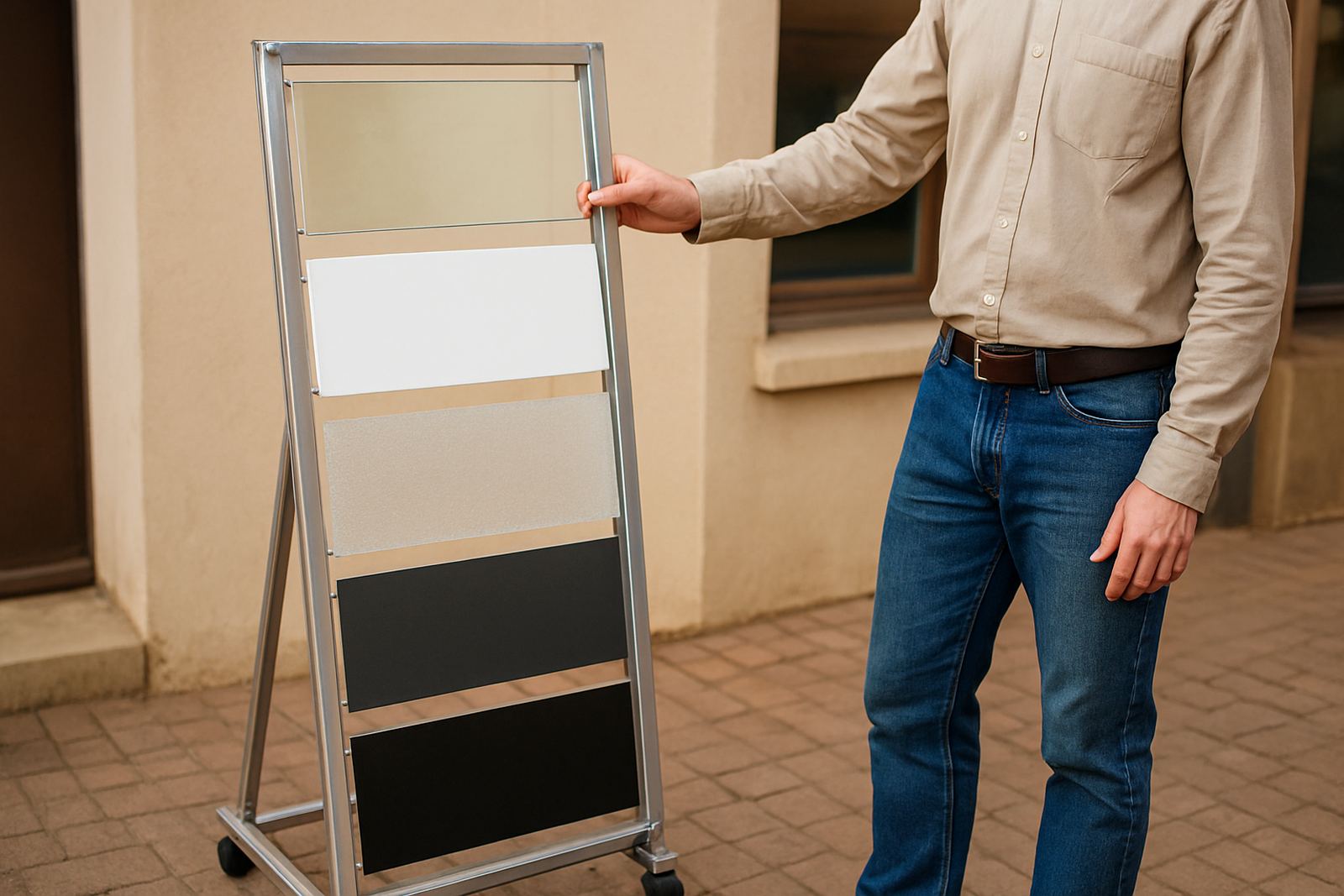
- Frosted or etched-look film: Good for privacy on office partitions, consulting rooms and street-facing windows.
- Opaque vinyl: Useful for bold blocks of colour, notices and high-contrast branding.
- Perforated window film: Helpful for shop fronts where you want outside branding but still need some outward visibility from inside.
- Cut vinyl lettering: A neat option for names, hours, directional text and simple branding on doors and panes.
In practice, many jobs use a mix. A glazed front door may need cut lettering and a safety band at eye level. A boardroom partition may need frosted film at seated height with clear upper glass left open. The cleanest result comes from matching the film to the purpose rather than trying to make one decal do everything.
How to plan decals for windows, partitions and doors
Good planning saves rework. Before anything is printed or cut, measure the exact visible area and note where handles, hinges, locks and frames sit. On older buildings around Bloemfontein and Botshabelo, the glass is not always perfectly square, so a quick site survey makes a big difference. If the decals need to line up across multiple panes, the spacing must be checked before production starts.
We also look at how people use the space. A glazed door that opens both ways needs markings that remain visible from either side. A reception window may need a privacy strip low down with a clear line of sight above it. If there is harsh sunlight, dark colours may fade sooner and very fine detail can become hard to read. That is why simple shapes and readable lettering often work better than crowded artwork.
For offices, schools, retail and healthcare spaces, the layout should support actual movement. People must be able to find the entrance, read the message and not walk into the glass. It sounds obvious, but a lot of bad decal work ignores the way a space is used day to day.
Production details that affect the final look
The final result is only partly about the artwork. The surface prep, print method, cutting and application all matter. Glass must be cleaned properly before installation, with no dust, polish or adhesive residue left behind. If the surface is not ready, bubbles and lifting edges can show up early, especially in warm weather.
For printed decals, colour matching and lamination are important. Lamination helps protect the print from scuffing, sunlight and cleaning chemicals. In a shop environment, that matters because windows get wiped often and people brush past them. In a coastal town, humidity can also affect the bond if the material is not suited to the conditions, though Bloemfontein's dry air brings its own challenges with dust and static.
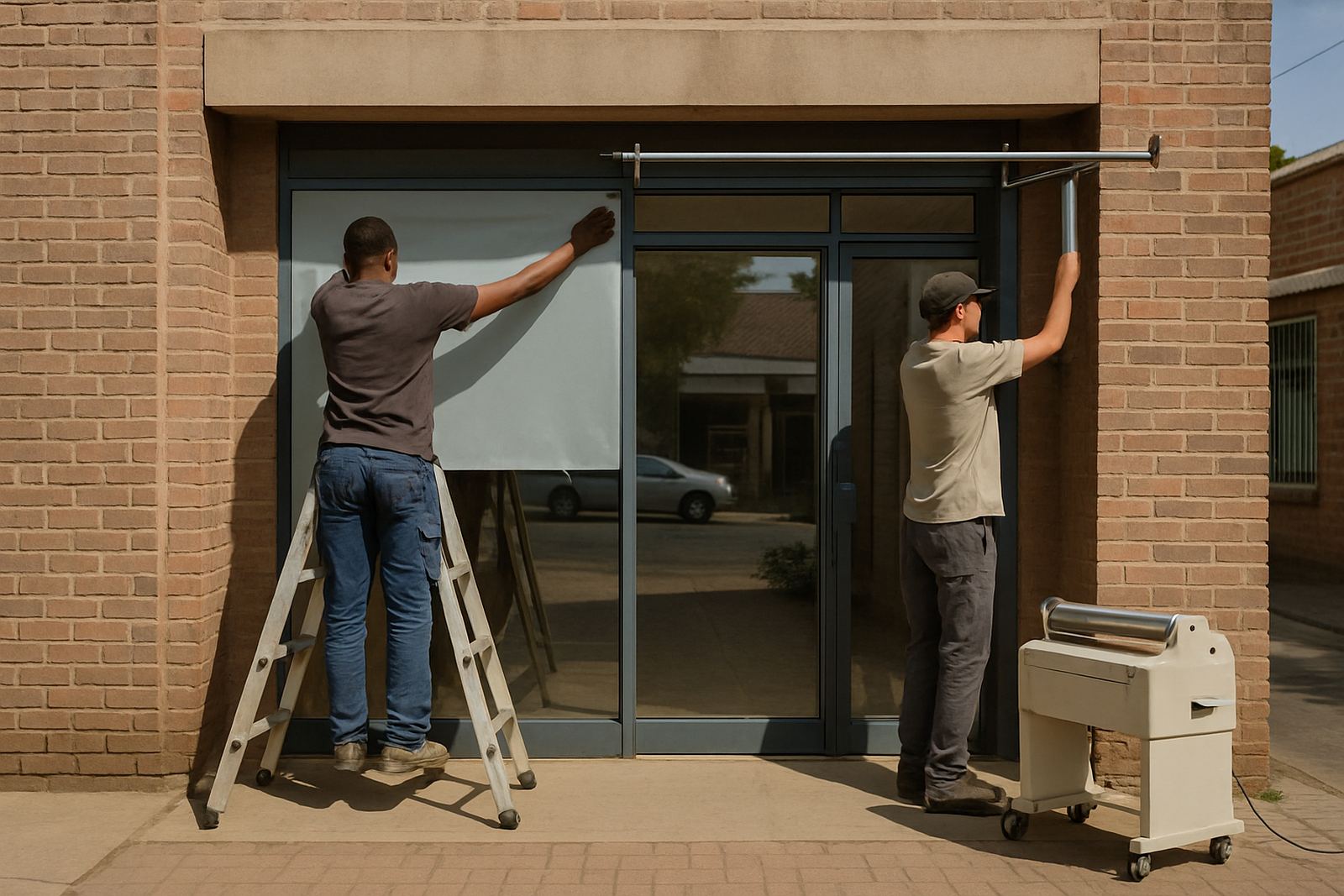
Our fabrication and installation team also thinks about finish. A neat edge, straight alignment and correct squeegee work make a bigger visual difference than most people expect. When a window graphic is crooked by only a few millimetres, the whole front can look untidy, even if the artwork itself is good.
- Use the right film for inside or outside application.
- Allow for handles, security grilles and opening panels.
- Choose readable text sizes for the viewing distance.
- Keep maintenance in mind if the glass is cleaned often.
- Plan for future changes if the message may need updating.
A local example from Bloemfontein retail
A useful example is a retail frontage in the Hamilton area where the owner wanted more privacy at eye level without making the shop feel closed off. The front windows faced afternoon sun and the interior had a lot of glass, so the brief was to reduce glare, keep branding visible and still allow customers to see into the store. We used a frosted band across the lower section, with cut lettering and trading details placed where they could be read from the pavement.
The same site had a glazed office door and a small partition beside the till point. Those were treated differently. The door got clear safety markings and the partition got a denser frosted panel for staff privacy. The result was not flashy, just practical, and that is often what works best. The owner later said customers found the entrance easier to spot, and staff were no longer distracted by people peering through the meeting area. Small changes, but they improved the space straight away.
That is often the real value of glass decals. They solve everyday problems in a way that feels tidy and intentional, not bolted on. And when the signage is done properly, it keeps doing its job without getting in the way.
Why installation matters as much as design
Even a well-made decal can fail if it is fitted badly. Temperature, dust and alignment all affect the result, especially on large panes or long runs of glass. In a place like Bloemfontein where mornings can be cool and afternoons hot, timing the application makes a difference. A rushed install in the wrong conditions can leave the film lifting at the corners or trapping air along the edges.
Our installation work covers shop windows, office interiors, doors and floor graphics where needed. We also handle maintenance visits for existing decals that need replacing after wear, tenant changes or a new promotion. If a business is changing its look, debranding can remove old film cleanly before new graphics go up. That helps keep the glass in good condition and avoids sticky residue from layered materials.
For businesses in Mangaung, Thaba Nchu, Botshabelo, Welkom and Kroonstad, the main advice is simple: think about purpose first, then material, then finish. A decal should help the space work better. If it does that, it has done its job.