Start with the message, not the material
Temporary signage works best when the message is brief and the viewing distance is clear. A sale notice outside a shop in Bloemfontein needs different treatment from an event board at a sports ground in Thaba Nchu. If people will pass at 40 km/h, keep the copy to the point and use large lettering. If they will stand close, you can add more detail such as dates, stand numbers, or directions.
Before anything is printed, ask what the sign must do for the next few days or weeks. Is it announcing a promotion, guiding visitors, or covering an area during maintenance? That answer decides whether you need a banner, vinyl decal, foamex board, corflute style panel, or window graphic. A sign that tries to do too much usually ends up doing nothing well.
- Use one clear call to action
- Keep dates, times and venue details easy to read
- Match the size of the text to the viewing distance
- Leave breathing room around logos and key words
Choose materials that suit the weather and the time span
Short term does not mean flimsy. Bloemfontein gets strong sun, dust, and sudden wind, while places closer to the eastern Free State can see more moisture and colder mornings. For a one week campaign you may not need the same finish as a permanent shopfront, but you still need something that holds shape and stays readable. Cheap material can curl, fade, or tear before the campaign even ends.
For outdoor use, ask about the likely wind load and where the sign will sit. A banner across an opening needs eyelets and proper tie points. A board fixed to a fence may need backing support so it does not flap. On floors, the print must be suitable for foot traffic and the edges should be secured well or people will lift them with shoes and trolleys. In humid conditions around open entrances, adhesive choice matters too.
- Vinyl banners: good for events, sales and roadside notices
- Rigid boards: better for freestanding direction signs or longer short term use
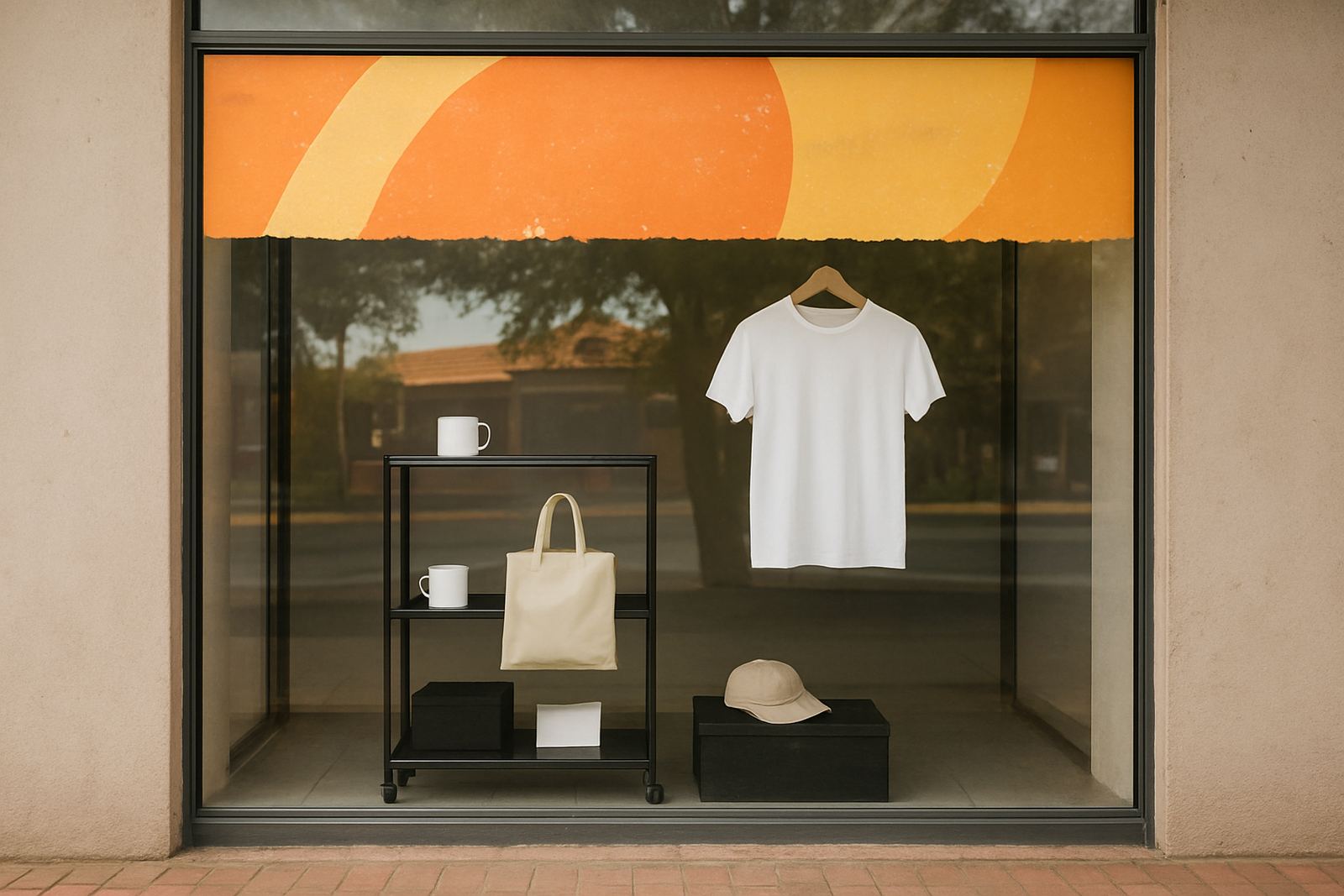
- Window decals: ideal for trading hours, promotions and privacy
- Floor graphics: useful for queue direction or in store campaigns
Placement decides whether the sign is seen or ignored
The best print in the world can fail if it sits in the wrong spot. In a busy retail street, a sign must clear parked vehicles, trees, poles and window reflections. At a school fete or community event, it should help people find the gate, parking, ticket point and toilets without asking for help every few metres. Think like the person arriving for the first time and place the sign where their eye naturally goes.
For road-facing signs, angle and height matter. If the board is too low, it disappears behind traffic or kerbs. If it is too high, drivers read it too late. For windows, avoid placing text over dark tint or patterned glass where the contrast drops. On walls and doors, check that handles, fire signage and access routes are not covered. Municipal rules and property conditions can also affect where you may fix temporary signage, so it pays to check before drilling or hanging anything. A small oversight can cost you time and a fine, which nobody wants.
- Keep sight lines open from the main approach
- Avoid placing copy behind trees, parked cars or poles
- Use contrast that works in bright sun and shade
- Check access, safety and permission before fixing to the surface
Plan for installation, removal and reuse
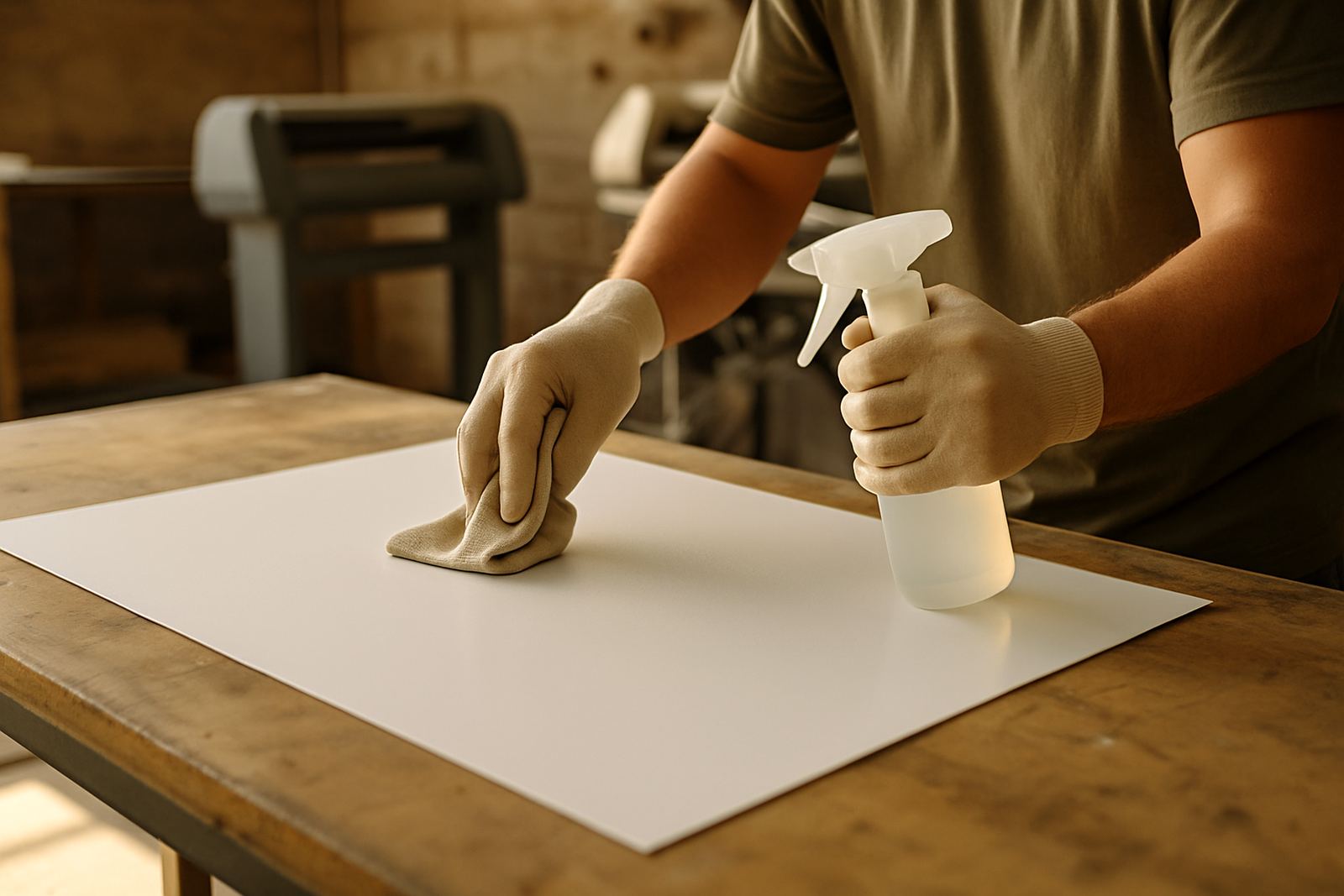
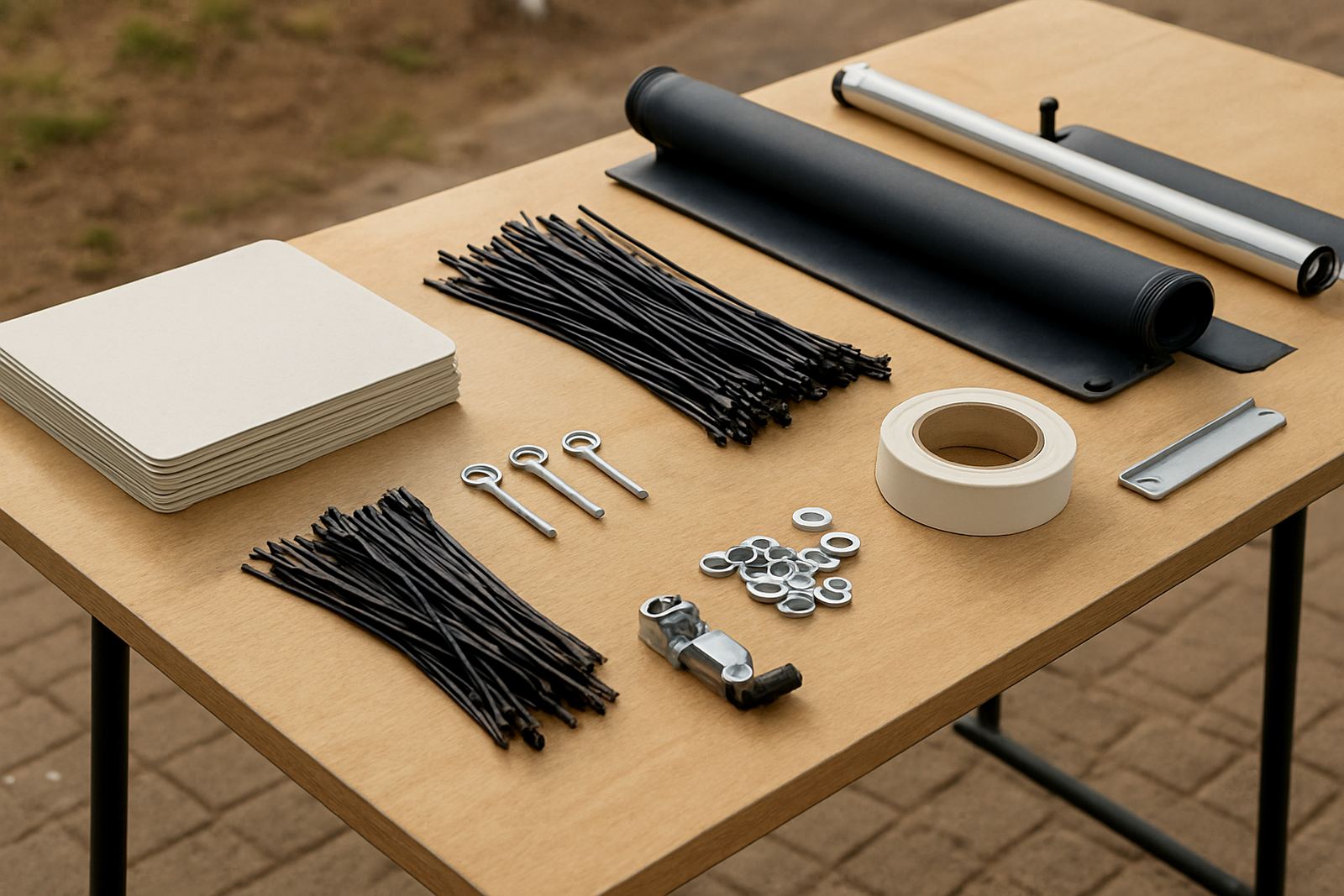
Temporary signage should go up quickly and come down cleanly. That means choosing fixings that suit the surface and planning the removal before installation starts. Tape is fine for some indoor applications, but not for every wall or window. Cable ties, adhesive vinyl, clips, frames and stand systems all have their place. The right choice depends on whether the sign must survive rain, heat, or repeated handling during an event.
It also helps to think about what happens after the campaign. If the sign may be reused, ask for a format that stores flat and rolls or stacks without damage. If it will only be up for a weekend, avoid overspending on materials that will never be used again. A clear handover from production to installation saves time, especially when the site opens early or electricity interruptions affect schedule and finishing work. We often see campaigns delayed because nobody planned for the takedown, then the job gets rushed and leaves marks behind.
- Confirm fixing points before printing
- Use removable adhesive where the surface allows it
- Keep tools, ladder access and site permissions ready
- Store reusable signs flat, dry and away from direct sun
Make temporary signs work harder with the right extras
Small additions can make a short term sign much more useful. A directional arrow on a banner helps when the event is set back from the road. A QR code can point people to registrations or menus, but only if the code is big enough to scan from the intended distance. Reflective material may help in low light parking areas, while lamination can protect graphics that will be touched often.
For vehicle graphics used over a campaign period, keep in mind that dust, washing and heat all affect the life of the print. If a vehicle is used for deliveries during the same week as a promotion, the graphics must be applied neatly and removed without leaving glue behind. On shop windows, temporary decals can be layered with trading hour notices or offer messages, but not so many that the window becomes cluttered. Less is usually better. One clean message on a clean surface always reads faster.
- Add arrows where visitors need direction
- Use QR codes only when they are large enough to scan easily
- Consider lamination for repeated handling or cleaning
- Keep the layout simple so the main message stands out
A local example from Bloemfontein to Botshabelo
Picture a weekend promotion for a retail tenant in Bloemfontein with extra foot traffic from Mangaung and Botshabelo. The team needs a window banner, two directional boards, floor markers at the entrance and a short term vehicle decal for a delivery bakkie. If the banner is fixed without enough support, the wind can twist it. If the floor graphics are placed too far from the door, customers miss them. If the vehicle decal is cut too small, it disappears in traffic.
In a case like this, the practical approach is simple: measure the site, confirm the surface type, print the right sizes, and install in the order people will experience the signage. Start with approach signs, then entry signs, then in store markers. A well planned temporary setup can turn a one day offer into a much stronger campaign without needing a large budget. That is where local experience helps, because the conditions in and around Bloemfontein are not the same as a coastal city or a mall interior.
Central Signs works with short term campaigns, event messaging and seasonal promotions for clients across Bloemfontein, Mangaung, Botshabelo, Thaba Nchu, Welkom and Kroonstad. The aim is always the same: make the message clear, keep the finish neat, and get the sign in the right place first time.