Factory Signs That Keep People Moving Safely
In a working factory, every sign has a job. It may mark a loading bay, warn about moving parts, direct forklifts, identify chemical stores, or show the right route to a fire point. Central Signs works with production sites in Bloemfontein, Mangaung, Botshabelo, Thaba Nchu, Welkom and Kroonstad where the sign has to stay readable in tough conditions and still fit the site rules.
For factory signage, the first question is not what looks best, it is what must be seen from 2 metres, 5 metres or across a full bay. We plan for the actual viewing distance, the colour of the wall or machine, the light levels, and whether the surface gets hit by dust, oil, steam or regular cleaning. On busy floors, a clear sign saves time and cuts confusion for supervisors and visitors.
Our team under Marius Jacobus van Rensburg handles site surveys, artwork setup, logo redraws, print production, vinyl cutting and sign fabrication in Hamilton, Bloemfontein. Lerato Molefe manages production, Johan Smit handles installation, and Thabo Ncgobo takes on fabrication when a sign needs brackets, frames or special fixing points.
Typical Factory Signage We Make For Industrial Sites
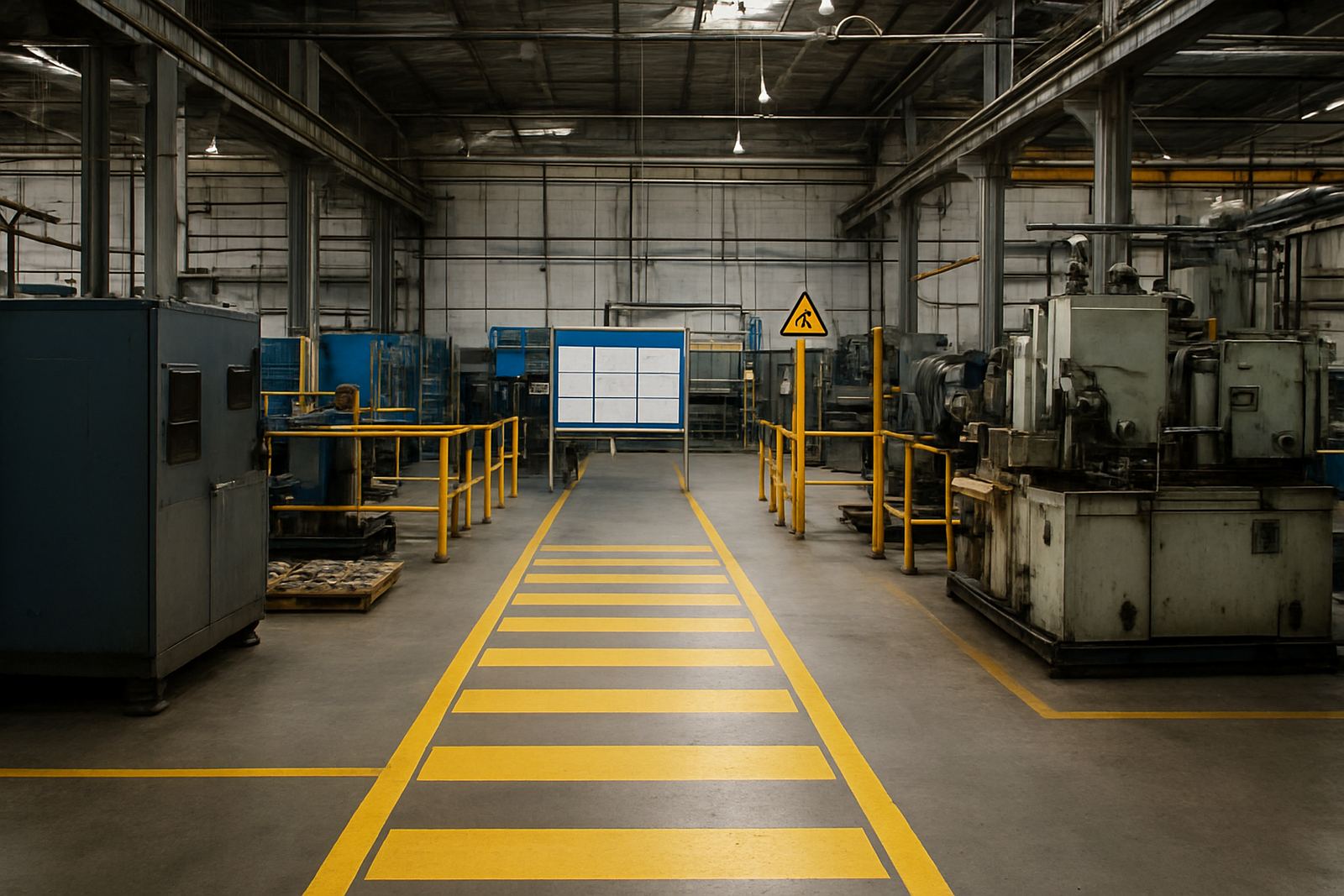
Most industrial sites need a mix of permanent signs and updateable graphics. We often prepare a package that includes wall signs, machine labels, floor markings, safety boards and direction panels for entrances or internal routes. For larger plants, it also helps to group signs by zone so each area has a clear visual language.
- Production line direction signs and bay identification
- Machine labels, warning labels and control point markers
- PPE requirement boards for gates and change rooms
- Fire equipment location signs and emergency route markers
- Floor arrows, no-go zones and loading bay marking graphics
- Shift notice boards and process boards for walls or doors
- Compliance graphics for hazardous areas or chemical storage
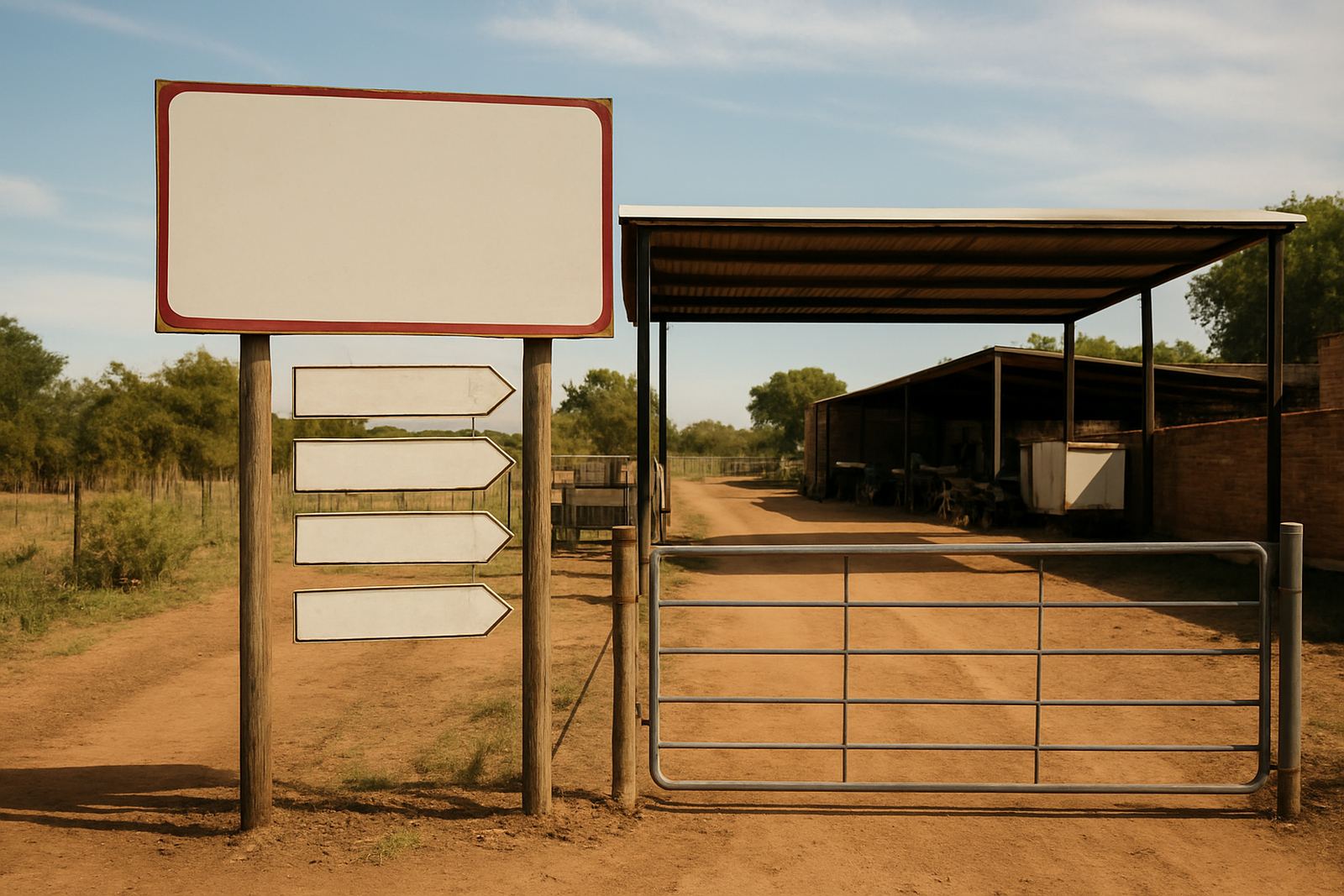
Materials depend on the site. Smooth interior walls may take printed vinyl or cut lettering. Equipment labels often need laminated vinyl so the print lasts longer against scrubbing and handling. For outdoor areas and yard signs, we usually look at stronger substrates and fixed mounting. If the site is near the coast or in a damp area, we allow for corrosion on fasteners and fittings too.
Planning The Layout Before Anything Gets Printed
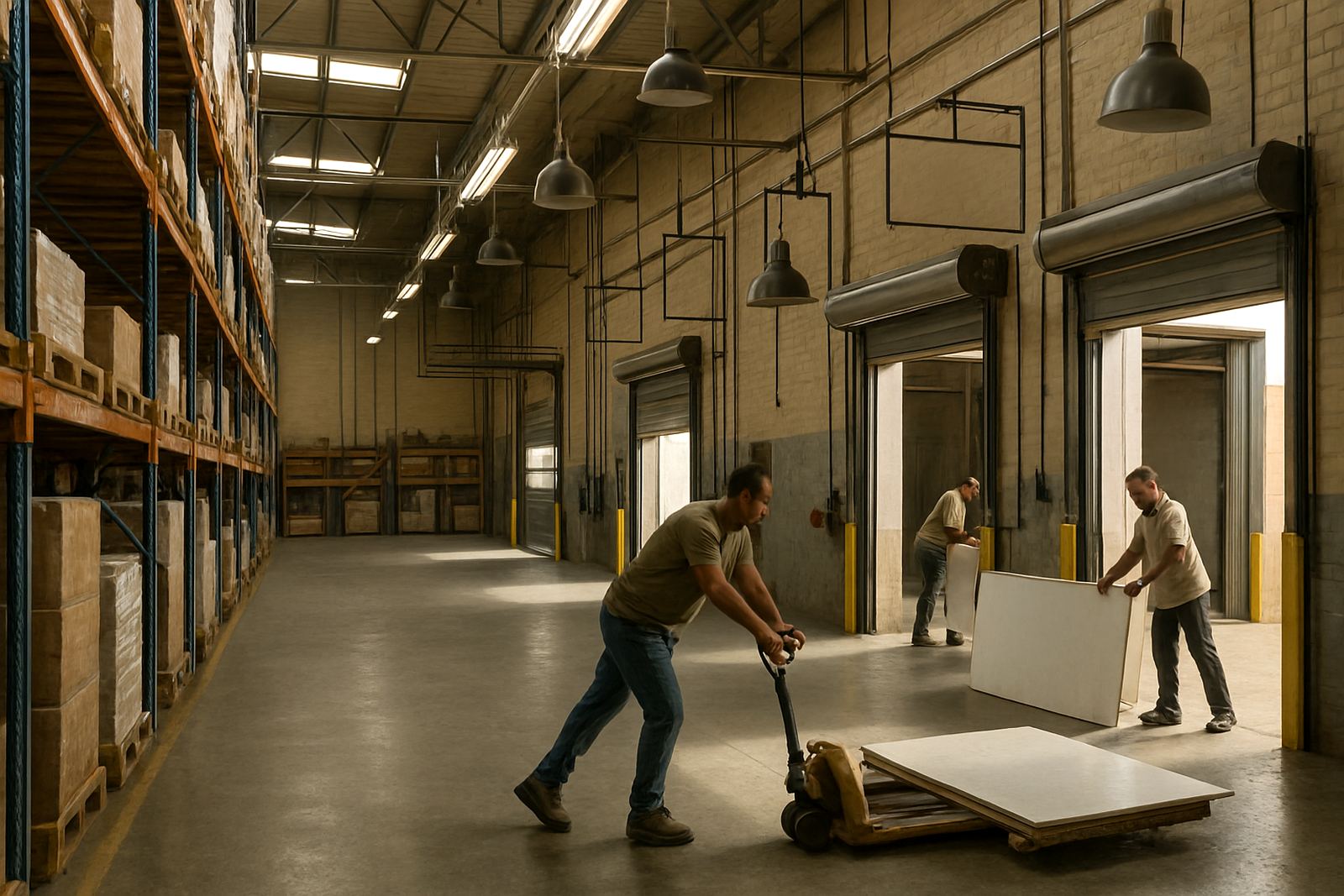
The best factory signage starts with a proper walk-through. A site survey helps us check where the sign should go, what height works, and which surfaces are suitable. In a factory, placing a sign too low can make it disappear behind stock or pallets. Too high and the message gets missed. We also look at glare from windows, forklift routes, and whether there is enough wall space for the wording that must stay readable.
Good planning means the signs work as a system. If the entrance board uses one set of colours, the internal route markers should follow the same logic. If a machine needs both an ID label and a warning notice, those items should match in size and placement so staff do not hunt for the important bit. That small bit of planning saves a lot of rework later on.
We also help with artwork setup and logo redraws when a client has old files, a faded board, or only a low-resolution copy of the existing mark. That matters on production sites where the line must stay consistent from the gate through to the floor. A rushed layout often leads to cramped wording, poor spacing and signs that are hard to replace later on.
Common Mistakes We See On Factory Floors
Factories often need signs replaced because the original ones were made for a tidy office, not a working floor. The usual mistakes are simple but costly. Tiny lettering is one. So is printing on a material that cannot handle heat, dust or chemical splash. Another common problem is placing floor graphics where pallets, trolleys or foot traffic wear them out in a few weeks.
Another issue is overloading one sign with too much information. If a board tries to carry a warning, a route map, a company message and a safety note all at once, people stop reading it. The clearest signs use short wording, bold contrast and the right size for the distance. In an industrial setting, plain language usually works better than fancy wording.
- Using indoor-only material in wet or dusty areas
- Mounting signs where stock or doors block them
- Choosing colours with poor contrast against the background
- Skipping lamination on high-touch labels
- Not allowing for future equipment moves or layout changes
It also helps to think about maintenance visits. A factory changes over time, and signs may need refreshing after new machines arrive or old lines are removed. Debranding and refurbishment can be part of the same plan instead of waiting until the floor looks untidy.
Budget Ranges For Factory Signage In Rand
Factory signage budgets vary a lot because the size of the site, the materials and the number of sign types all change the final figure. A small set of machine labels and warning decals may start from about R1 500 to R4 000. A fuller pack for a small workshop or production room can sit between R5 000 and R15 000 depending on the count and finish.
For larger industrial sites with entrance boards, internal direction signs, floor graphics and compliance notices, budgets often move into the R15 000 to R45 000 range. If there are fabricated frames, outdoor mounting, multiple installation visits or special laminates, the total can go higher. We quote according to what the site actually needs, not a one-size package.
Some clients choose to phase the work. That can make sense if the factory is operating around the clock or if different areas need updating at different times. We can prioritise the highest-risk zones first, then follow with remaining labels, boards and floor markings once production allows access. That approach keeps disruption low and gives better value over time.
What Happens When You Order Through Central Signs
Clients usually reach us through the enquiry form on our contact page, then we check the site location and the brief. From there, Annelie Botha coordinates the client side, confirms the requirements and helps gather the details needed for quoting. If the job needs measurement, Johan or another installer can attend site for a survey in Bloemfontein or nearby towns.
Once the layout is approved, production moves to printing, cutting, lamination and fabrication where needed. Kagiso Moeketsi handles vehicle graphics where the factory fleet also needs markings, while Zanele Dlamini sets up the artwork for clear reproduction. For signs that need sturdy frames or custom fittings, Thabo Ncgobo prepares the fabrication work before installation.
Factory signage should be practical, legible and suited to the conditions on site. When it is planned properly, it helps staff move faster, visitors find the right place and safety notices stay visible where they matter most.