What a warehouse usually needs on the floor and walls
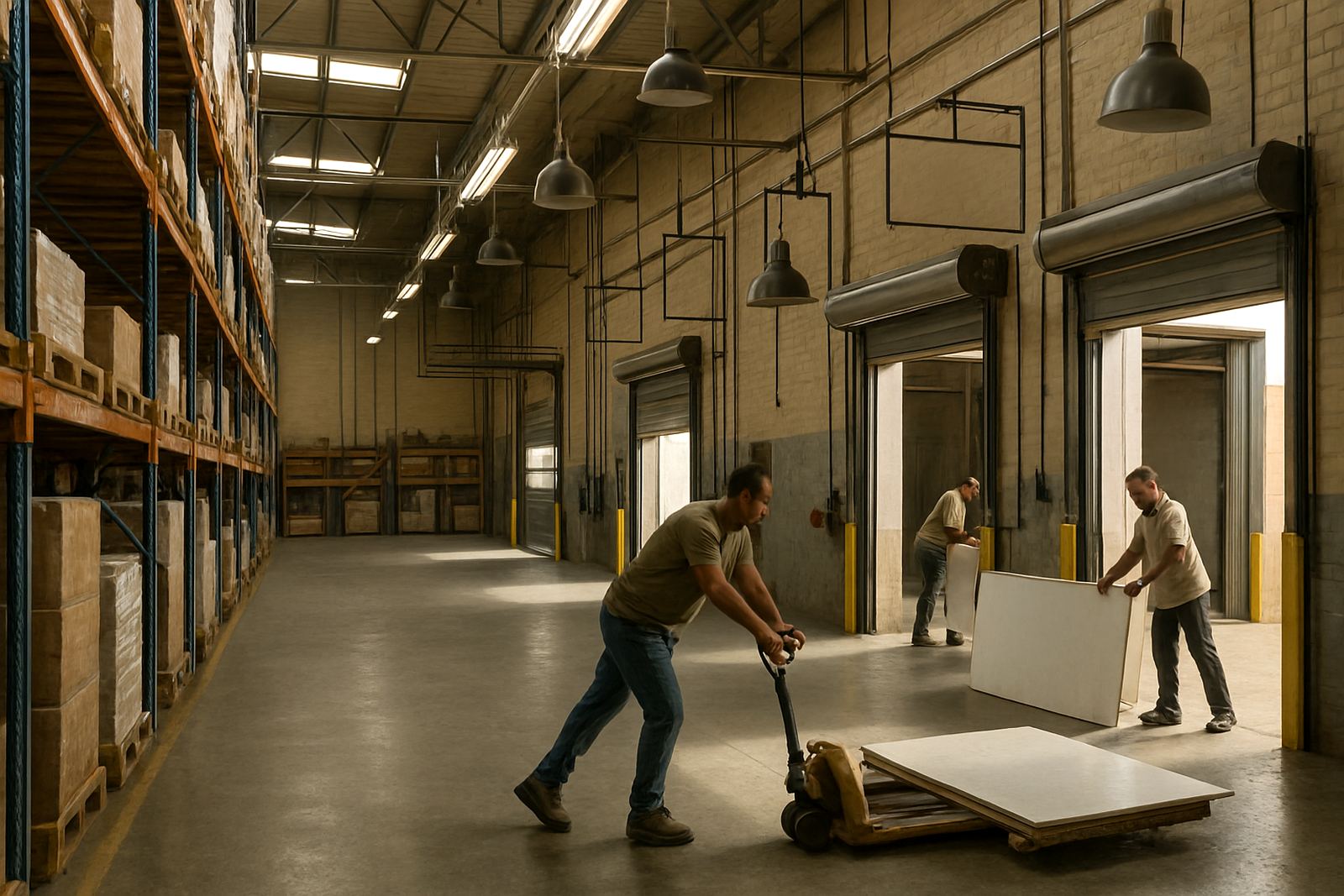
In a working warehouse, signs are not decoration. They guide drivers into the right bays, mark pedestrian routes, show fire points, and help staff find stock without wasting time. For facilities in Hamilton, Bloemfontein and across Mangaung, the right package usually starts with a site survey so the sign plan matches the actual building, vehicle turning space, racking heights and loading pattern.
Typical equipment includes rigid board signs for rules and safety notices, self-adhesive vinyl for doors and equipment, floor graphics for wayfinding, and hanging or wall-mounted signs for aisles. Where there is a lot of dust, traffic or pallet movement, materials need to be chosen carefully so they hold up under cleaning and daily contact.
- Aisle numbers and bay identifiers
- Loading dock signs and truck directions
- Pedestrian walkways and exclusion zones
- Fire equipment and emergency exit signs
- Receiving, dispatch and returns area labels
A layout that helps people and forklifts work safely
Good warehouse signage follows the way the site actually works. That means the main route signs should be visible from truck cab height, while safety and process signs need to be readable on foot. In larger sites serving Welkom, Kroonstad and Thaba Nchu, a simple numbering system for aisles, racks and loading doors can save a lot of time during picking and dispatch.
We usually advise clients to keep the message short and consistent. If one zone uses colours for stock class or loading priority, use the same system through the whole building. Too many different sizes, fonts or symbols make the floor harder to read and can slow staff down, especially when there are shift changes and high volume receiving days.
- Use large, high contrast text for route and bay signs
- Keep pedestrian and forklift routes clearly separated
- Place dock signs where drivers can read them before turning in
- Repeat critical warnings at eye level and at entry points
- Allow for future rack expansion and new doors
Common sign types for storage and logistics sites
Most warehouse sites need a mix of printed, cut and fabricated items rather than just one sign type. For example, vinyl can handle door labels and coded markings, while rigid signs work better for permanent safety boards and shipping instructions. If the site has a lot of movement between indoor and outdoor areas, lamination helps protect graphics from abrasion and frequent wiping.
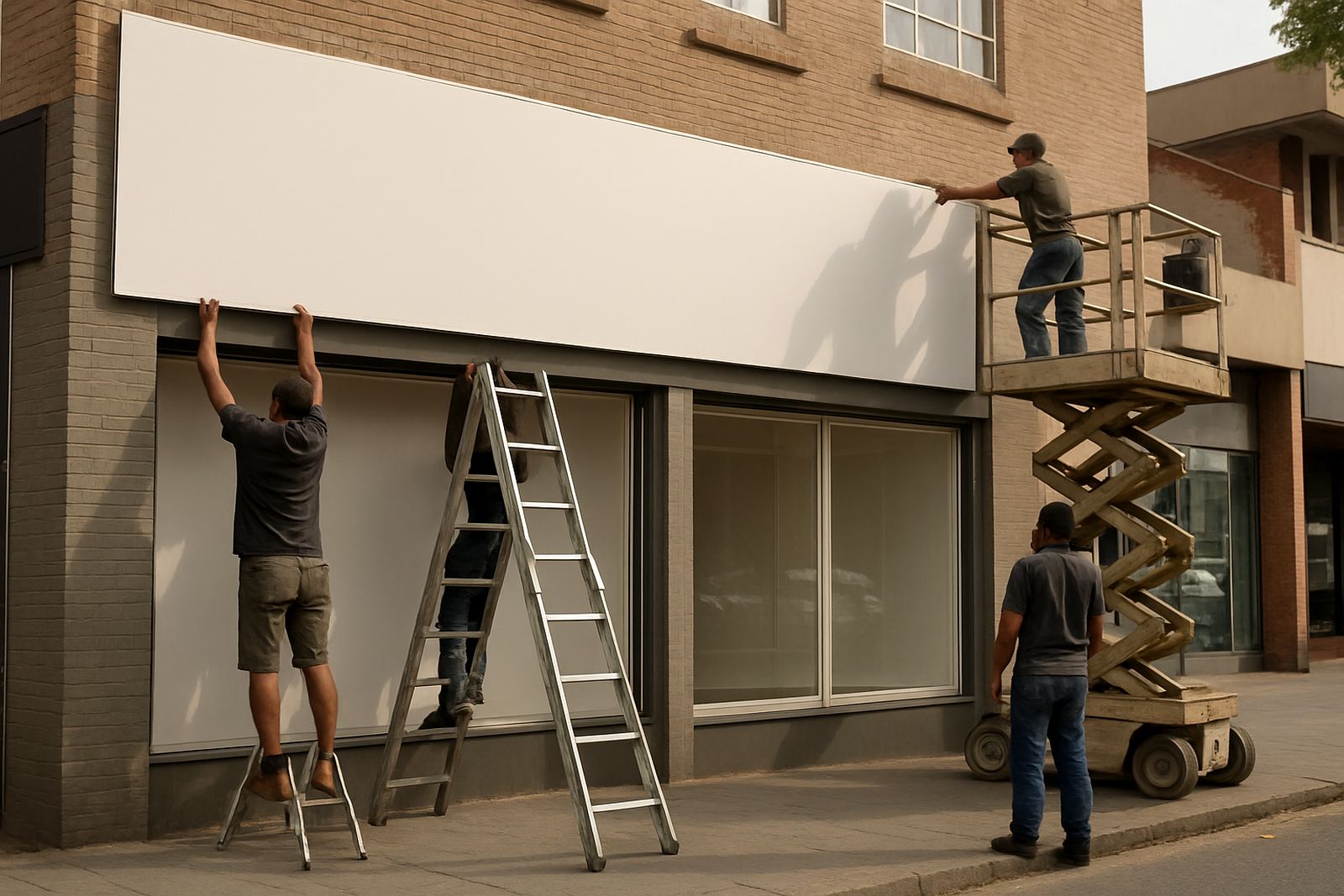
Central Signs can handle artwork setup, logo redraws where needed, vinyl cutting, print production, fabrication and installation. We also do debranding and refurbishment for sites that are changing tenants or updating old signage, which is common in shared industrial units and logistics parks. On active sites, work is often planned around off-peak hours so staff are not interrupted.
- Directional arrows for receiving and dispatch
- Rack labels and shelf markers
- Safety boards, PPE notices and no entry signs
- Dock door numbering and trailer instructions
- Floor markings for walkways, staging and hazard areas
Materials that hold up in Free State conditions
Bloemfontein warehouses deal with dust, dry air and strong sun at entry points, while some sites have cold rooms or wash areas that bring different wear patterns. In other towns, such as Botshabelo and Brandfort, you can also get a fair amount of wind and grit around yard areas, so fixing methods matter just as much as the printed face. The wrong adhesive or thin board can curl or lift, and then the sign does not last long.
For outdoor docks and yard signs, we often suggest UV-stable print, laminated vinyl and sturdy mounting on metal or board. Inside, where pallets and trolleys pass close by, signs should be fixed high enough to avoid knocks but still visible. If the site runs after hours, it is worth checking sight lines under low light too, since poor lighting can hide important warnings.
- UV exposure at doors and yard entrances
- Dust and regular cleaning in dispatch zones
- Impact from pallet jacks, forklifts and trolleys
- Humidity near wash bays or cold storage
- Lighting changes during load-shedding and night shifts
Mistakes that slow down a warehouse
One common mistake is ordering signs before the floor plan is final. If aisles are renumbered later, the whole system becomes messy and staff start ignoring labels. Another is using small text on signs that need to be read from a moving forklift or truck cab. That may look neat on paper but it does not help on site.
Some businesses also overdo the wording. A sign should tell the person what to do next, not give a long explanation. In a busy facility, a short line like Receiving Only or No Pedestrian Access works better than a paragraph. Another error is placing signs where stacked goods or open doors block the view. It sounds obvious, but it happens more often than people think.
Before production starts, it helps to walk the site, check the traffic flow and confirm the final positions with the warehouse manager. That small step saves rework and makes the finished system much easier to live with.
What a warehouse signage budget looks like
Costs depend on the number of signs, the size of the site, the materials used and whether installation is included. A small set of basic labels and safety boards for a compact storeroom may start from around R2 500 to R6 000. A more complete warehouse package with aisle markers, dock signage, floor graphics and multiple safety boards often sits between R12 000 and R35 000.
Larger logistics facilities, especially those with multiple loading bays, external yard signs and repeated numbering across several zones, can move into the R40 000 to R90 000 range and beyond. Refurbishment and debranding can sometimes reduce the spend if the structure is already in place. We also plan around staged rollouts where the site cannot be closed, so the work is done in parts without stopping operations.
For clients in Bloemfontein, Mangaung, Thaba Nchu, Welkom and Kroonstad, the best starting point is usually a site survey and a simple sign schedule. That lets us quote on the actual layout and not just guess from a quick note.