What 3D lettering is and how it reads
3D lettering is made from individually cut letters or logo shapes that stand proud from the surface instead of lying flat like a printed panel. That raised profile catches light, creates shadow and gives the sign more presence, especially on plain painted walls, tiled entrances and glazed shopfronts. For many businesses in Bloemfontein, this is the best option when the brand must look professional without being overdone.
We make 3D lettering in a range of materials and finishes, including solid colour face materials, painted finishes, metallic-look options and illuminated builds where the client wants light from behind or through the face. Lettering can be mounted directly to the wall, spaced off the surface on studs, or fixed on a backboard when the wall is uneven or the brand needs a neat boundary. It is suitable for indoor and outdoor use, depending on the material and exposure.
The look can be crisp and minimal, or more detailed for logos with multiple elements. We also handle logo redraws where the supplied artwork needs cleaning up before production, which is common when the original file is old or low resolution.
Common uses for offices, stores and buildings
Raised lettering works well wherever you need a strong first impression. In reception areas it gives clients a clear brand point the moment they walk in. On retail fronts, it helps the store stand out from street level and makes it easier to read from the parking area or pavement. For exterior branding, it is a good choice when you want a longer lasting finish than a temporary print.
It is also a practical option for schools, medical rooms, church entrances, sectional title buildings and light industrial sites. In Mangaung and surrounding towns, we often use it for tenant branding, tenant directories, directional wording and logos above doors or behind counters. On busy roads, the depth helps the name hold its shape in strong sun and uneven lighting.
- Reception walls and feature entrances
- Shopfronts and mall frontage branding
- Office lobby walls and boardroom walls
- External building names and directional signs
- Vehicle showroom or showroom-style display walls
Sizes, materials and finish options
There is no fixed size for 3D lettering because each job depends on viewing distance, wall space and how much detail is in the logo. Small interior letters may be 100 mm high, while exterior building names can run to 600 mm or more per letter. A logo with fine lines may need a slightly larger overall size so the detail does not get lost when cut and finished.
Material choice matters as much as size. For indoor signs, lighter materials can be used where the wall is sound and the sign is not exposed to direct weather. For outdoor use, we look at UV exposure, rain, coastal humidity and cleaning access. In the Free State, strong sun and dust can affect finish over time, while in more exposed sites a durable face and proper fixing method are important. Powder-coated or painted finishes can be matched to your brand colours, and a clean edge detail helps the sign look sharper from any angle.
- Flat face letters for a clean corporate look
- Built-up letters for a deeper, more premium profile
- Painted or colour-matched finishes
- Matte, satin or gloss options depending on the setting
- Optional halo or backlit presentation where power is available
Installation, mounting and power considerations
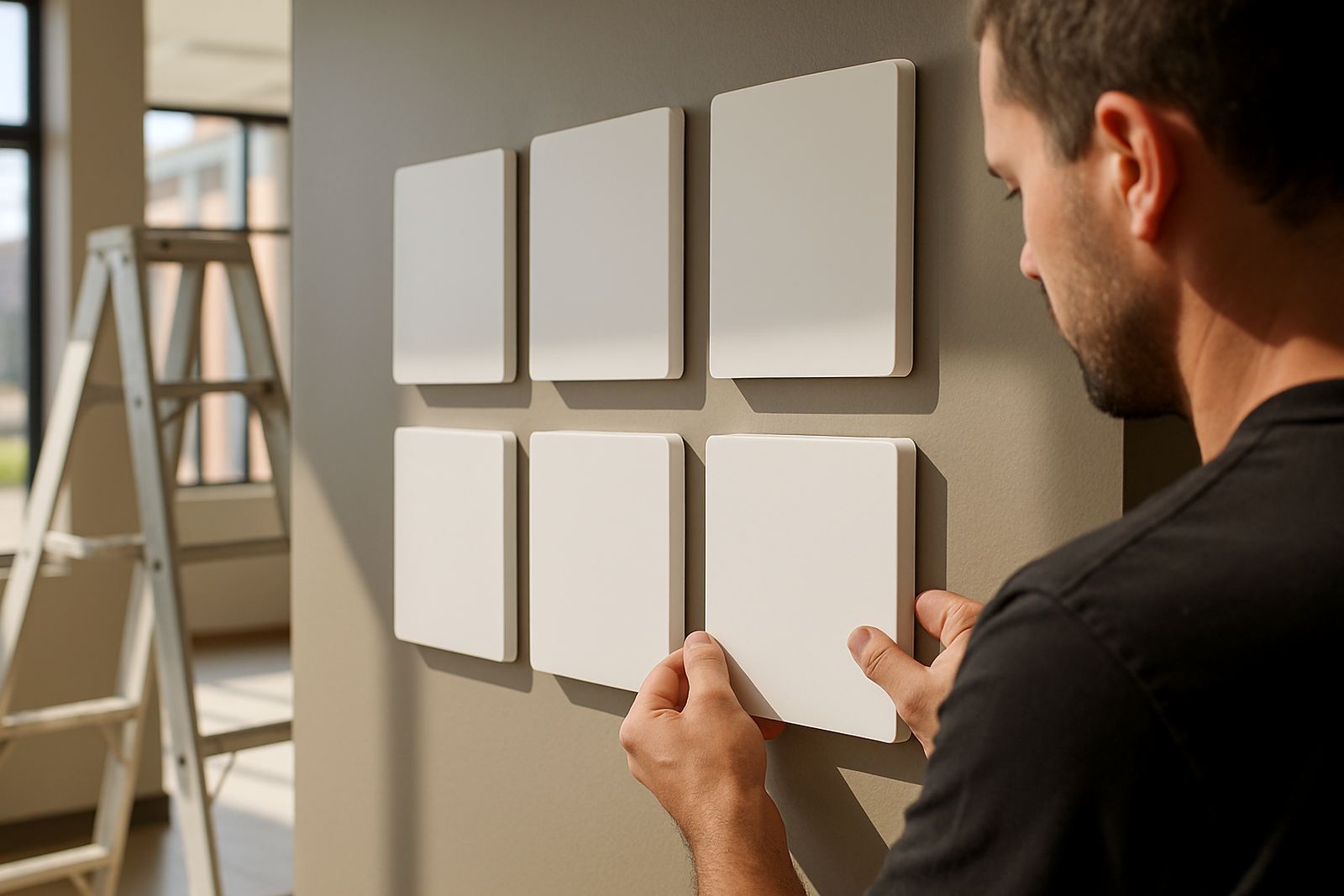
Good installation is just as important as the sign itself. We start with a site survey where needed, checking wall condition, fixing points, access and any special requirements like tiled surfaces, cladding, glass or uneven plaster. For exterior work, mounting must cope with wind, heat and long-term movement. On some buildings we fit spacers or standoffs so the letters sit level and breathe behind the surface.
If the sign is non-illuminated, no power is needed. If the lettering is illuminated, there will be electrical work involved and the site must allow for a suitable supply, safe routing and access for maintenance. We recommend that any powered sign has a proper isolation point and is installed in a way that allows servicing without damaging the wall. On sites where load-shedding or unstable supply is a factor, it is worth checking whether the lighting should be on its own circuit or tied into an existing one.
For some exterior locations, especially in commercial centres around Bloemfontein and Welkom, access timing can matter because of trading hours, security control and vehicle movement. We plan the install so it causes as little disruption as possible.
What to check before you order
The best results come from good artwork and a clear brief. Before we start, it helps to know where the sign will go, what size is available, and whether the brand should be read close-up or from across a parking area. If you only have a logo image, we can help with artwork setup and redraws, but the more detail you provide the better the final result will be.
These are the main points to confirm:
- Exact wording and spelling, including punctuation
- Preferred colours and any brand references you already use
- Wall type or mounting surface, for example painted plaster, tile, glass or cladding
- Indoor or outdoor use, plus sun and weather exposure
- Whether the sign must be lit or non-illuminated
- Approximate size, viewing distance and available wall space
- Any site restrictions such as mall rules, height limits or after-hours access
It also helps to know whether the sign must be removable later. If the space is leased, debranding and future refits may be part of the plan, so the fixing method should suit that from the beginning.
Care, cleaning and servicing over time
3D lettering is low maintenance, but it still benefits from proper care. Dust and pollution can build up on exposed faces, especially on roadside sites and in dry seasons. A soft cloth, mild soap and clean water are usually enough for routine cleaning. Harsh chemicals, coarse pads and pressure washing too close to the face can mark the finish or loosen edges, so it is better to keep it gentle.
If the lettering is illuminated, check it now and then for dim sections, loose cables or water ingress after heavy rain. A maintenance visit is useful where the sign is high up or where it forms part of the main public frontage. We also handle refurbishment when a business wants to refresh an older sign, replace faded parts or bring the look in line with a rebrand. In some cases, a partial respray or new face panel is enough instead of a full replacement.
For sites in and around Botshabelo, Thaba Nchu, Kroonstad and smaller Free State towns, a planned service visit can extend the life of the sign and keep the frontage looking tidy for longer. It is a simple way to protect the image without replacing the whole installation.
Key facts
| Product type | Raised letters and logos for walls, facades and storefronts |
|---|---|
| Typical sizes | From about 100 mm to 600 mm+ letter height, depending on viewing distance |
| Materials | Cut solid face materials, built-up sections, painted finishes and mounting hardware |
| Mounting options | Direct fix, standoff mount, backboard mount or hidden fixing where suitable |
| Lighting options | Non-illuminated, halo-lit or front-lit where power and site conditions allow |
| Service area | Bloemfontein, Mangaung, Botshabelo, Thaba Nchu, Welkom, Kroonstad and nearby towns |