
1. Start with the purpose of the sign
Every shop sign needs a job to do. Some signs must pull passing traffic from the road, while others need to guide customers to a doorway, a courtyard, or an upstairs office. Start by deciding whether the sign is meant to identify the business, promote a special offer, mark trading hours, or do all three.
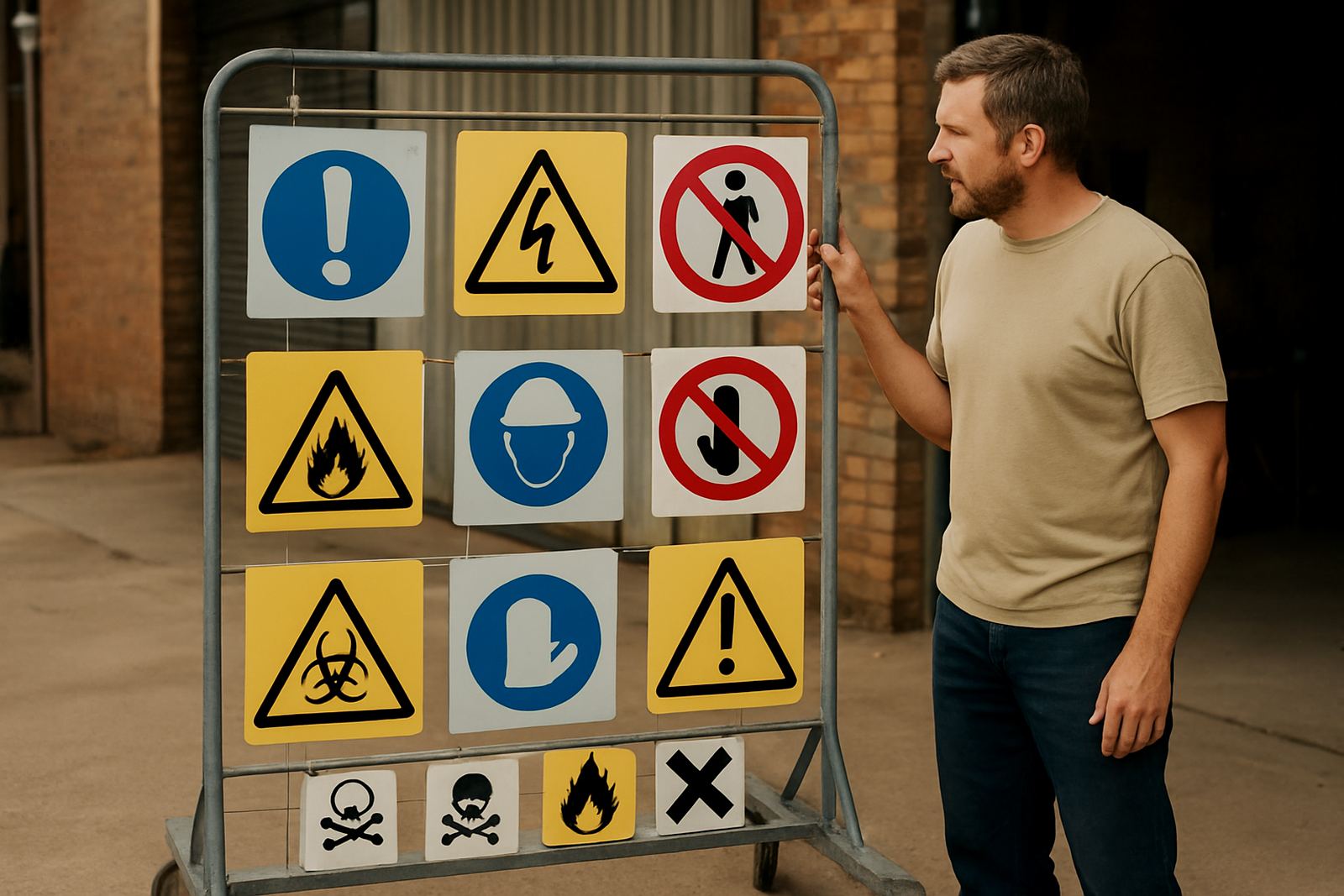
That simple decision affects size, material, lighting and where the sign should sit. A sign facing Nelson Mandela Drive will not be set up the same way as a small frontage sign in a side street in Hamilton, or a window graphic for a retail unit in Botshabelo. If the sign is only one part of your visual set, note the other items too, such as door decals, floor graphics, directional stickers or a back-of-house label set.
- What must the sign achieve at 10 metres, 20 metres, and from the pavement?
- Will it be viewed by drivers, pedestrians, or both?
- Do you need one main sign or a full set of signs for the whole site?
2. Measure the site properly before you order
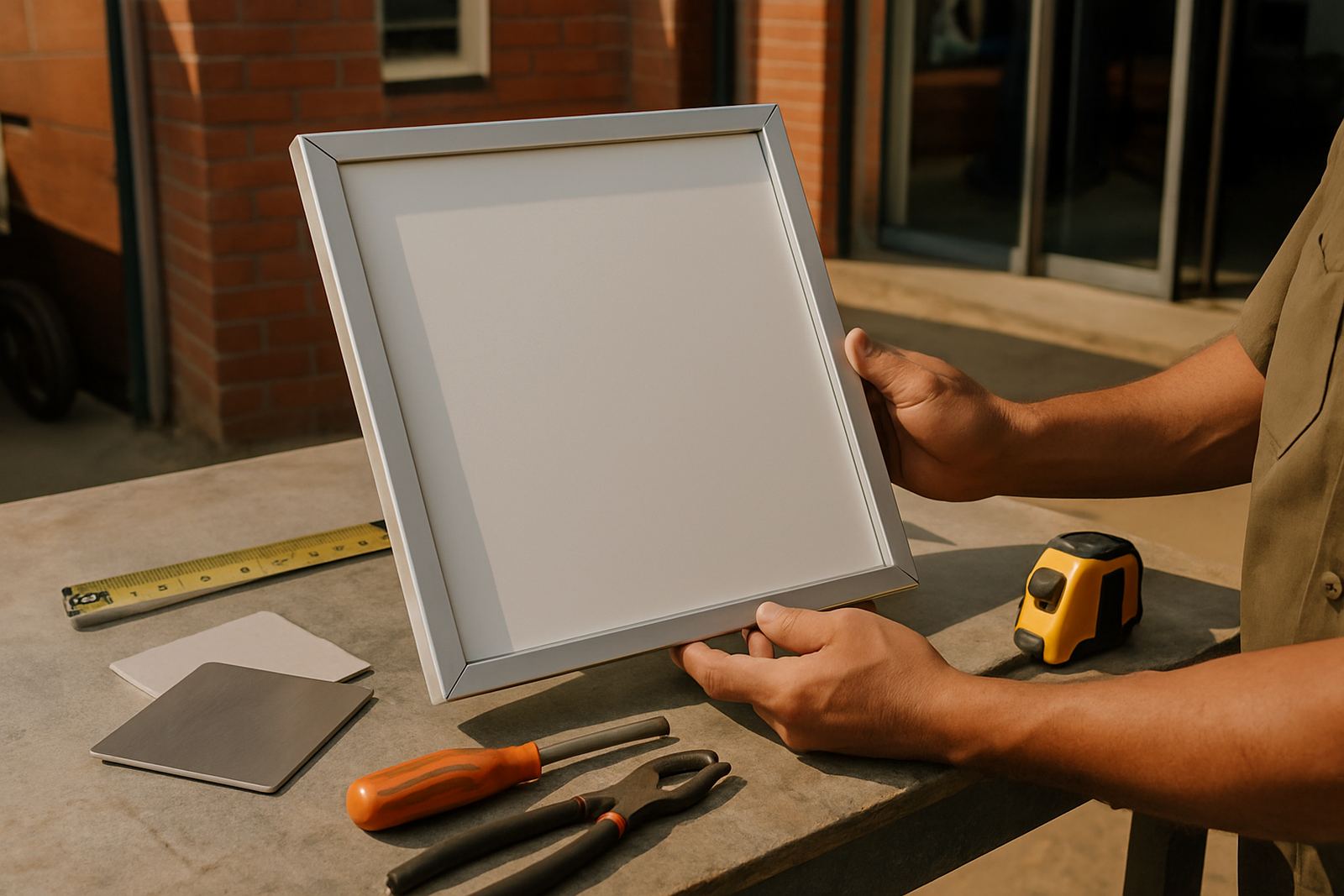
Good sign work starts with proper measurements. Measure the wall, fascia, window, door or fence where the sign will go, and note anything that may affect fitment such as downpipes, metres, lights, security bars, roller shutters or uneven plaster. If you can, take photos in daylight and at the time of day the sign will be seen most often.
We also need to know whether the sign will be mounted indoors or outdoors, and if the site is exposed to wind, dust or strong afternoon sun. In the Free State, that matters. A sign on an open edge in Welkom may need a different fixing plan from a sheltered shopfront in central Bloemfontein. If the building is in a centre or municipal area, check any signage rules before you go too far. Some landlords also have their own conditions for size, fixing points and illumination.
- Width and height of the available sign area
- Distance from the ground to the top and bottom edges
- Any obstacles, cables, lights or shutters near the sign position
- Photo of the frontage from across the street and from close up
3. Gather the wording, artwork and brand details
Before production starts, we need the exact wording to appear on the sign. That includes the business name, slogan, contact details, opening hours, services, website address if used, and any wording required by a landlord or site manager. Check spelling carefully. One small error on a sign is expensive to fix later, especially on larger fabricated panels or vehicle graphics.
Send your logo files if you have them, and if not, send the clearest version available. Sometimes a logo has to be redrawn for print or cutting, especially if the original file is low resolution or old. If you have brand colours, it helps to supply the colour references or a sample swatch. If not, a clear photo of existing stationery or a previous sign can still be useful. Zanele often sees projects where the old logo has been copied many times and the edges have gone soft, so a redraw can make a big difference.
- Correct business name and slogan
- Preferred colours and any do not use colours
- Logo files, artwork or a clear photo of the existing logo
- Any secondary text, trading hours or legal wording
4. Choose materials that suit the site
The right material depends on where the sign will live and how long it must last. A shopfront facing full sun needs different materials from an indoor exhibition panel or a temporary sale banner. For coastal humidity or dusty roads, we often look at what will hold its shape, keep its colour and stay readable after a few seasons.
Common options include printed banners, cut vinyl, laminated graphics, fabricated panels, decals for glass, and display boards for windows, walls, doors and floors. If the sign will be handled often, consider a tougher finish. If it will be cleaned regularly, ask about the best surface for wiping and maintenance. For load-shedding conditions, it also helps to decide early whether the sign must work without lighting, or whether you want a lit face, back panel or internal illumination later on. If you expect the sign to move sites, ask for a format that can be removed and reinstalled without damage.
- Indoor or outdoor use
- Temporary, seasonal or long term
- Wind, sun, dust and moisture exposure
- Need for cleaning, refurbishment or later changes
5. Confirm installation access and timing
A sign can only be installed properly if the site is ready for it. Check whether installers will have access to the frontage, whether there is parking for a vehicle with equipment, and whether lifts, ladders or access equipment can be used safely. If the sign is high up, on a glass frontage, or above traffic flow, the fitting plan must be clear before the day starts.
Timing matters too. If you are opening a branch, launching a special, or changing a tenancy, plan the sign order early enough for artwork, print production, fabrication and installation. Delays happen when a landlord still has to approve the layout or when a municipal requirement changes the size of what can be displayed. A practical checklist before the fitting date saves time and avoids last-minute rework.
- Site access confirmed for the installation team
- Power availability if the sign needs electrics
- Permission from landlord, centre management or property owner
- Preferred date and any trading hours that may affect access
6. Check the sign against your budget and maintenance plan
Before you sign off the job, make sure the sign matches your budget not just today, but over time. Ask what is included in the quote, such as site survey, artwork setup, print production, sign fabrication, fitting and any follow-up maintenance visits. If the sign will be changed often for promotions, ask which parts can be replaced without redoing the whole unit.
It is also worth thinking about upkeep. Some signs only need a wipe down. Others need periodic checks, tightening, re-laminating, or refurbishment after sun and weather take their toll. If your business has multiple branches in Bloemfontein, Mangaung, Botshabelo, Thaba Nchu, Welkom or Kroonstad, a standard sign spec can make future rollouts easier. Johan and the installation team usually find that consistent sizing and mounting details save a lot of trouble later on, especially when branches are spread over different sites.
- What is included in the quote
- How often the sign may need cleaning or servicing
- Whether replacement parts are easy to source later
- Whether the same format can be repeated at other branches