Where floor graphics earn their keep
Floor decals are useful anywhere people need clear direction or a quick visual prompt. In retail they can point customers to promotions, fitting rooms or payment points. In factories and warehouses they can show pedestrian routes, forklift zones, fire lanes and stacking areas. In clinics, schools and offices they can help manage waiting lines and keep entrances flowing properly.
For Bloemfontein businesses, the big advantage is simple: the floor is already there and it sees every footstep. A well placed graphic can carry a message where wall space is limited or where people naturally look down as they walk. That makes it ideal for entrances, corridors, lifts, passages, shop aisles and tiled lobbies.
We often advise clients to think in terms of movement first, then message. If the floor graphic is only decorative it may be noticed once. If it also improves flow, safety or queue control, it earns its place every day.
Safety markings that people actually follow
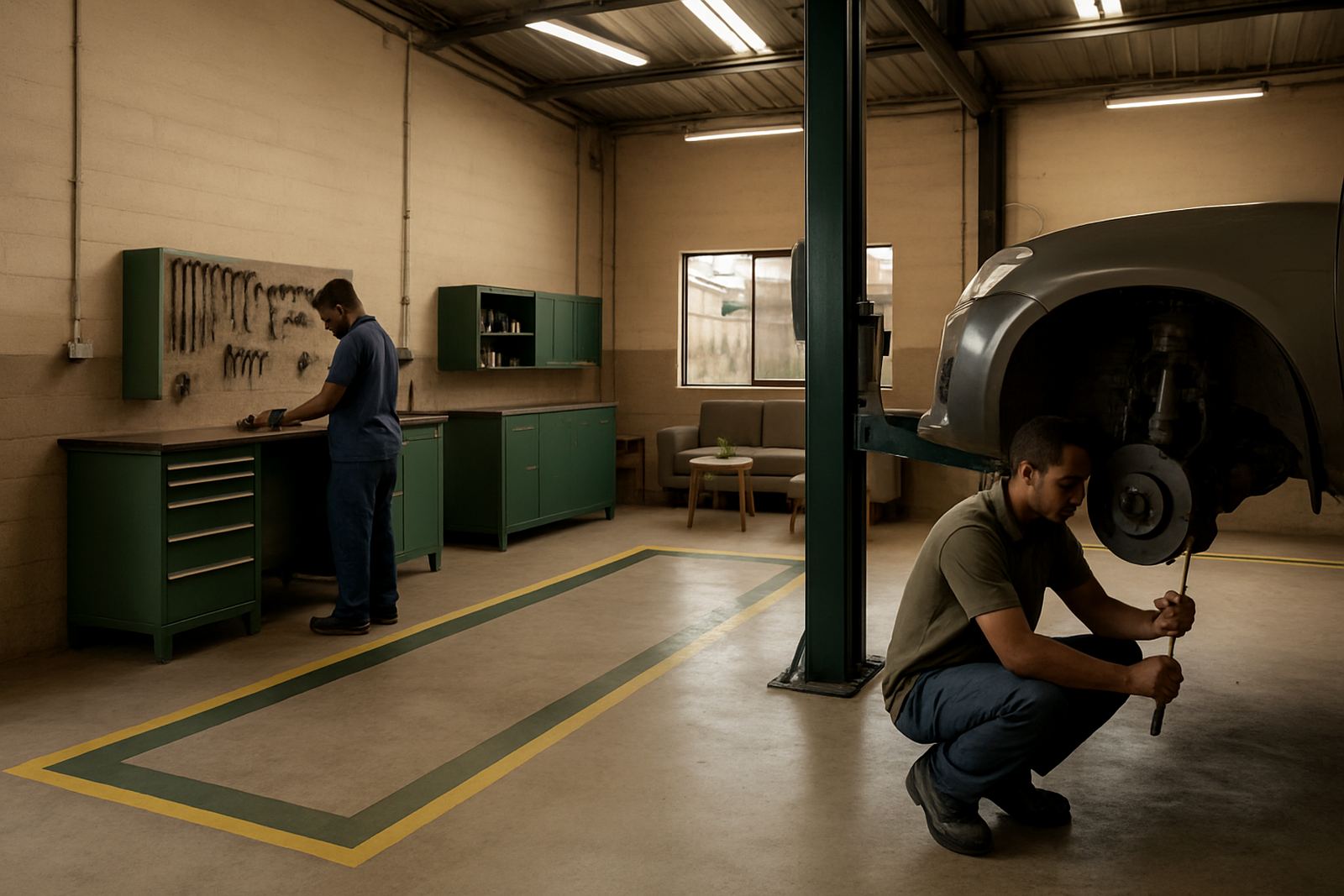
In workshops, stores and public buildings, floor markings need to be easy to read at a glance. Clear colour contrast matters, especially where there is dust, artificial light or busy foot traffic. A neat warning graphic is better than a hand painted line that flakes away after a few cleanings.
For safety use, we look at where the surface gets wet, how much grit is tracked in, and whether the area is exposed to sun through glass. Coastal humidity is not a big issue in Bloemfontein, but strong cleaning chemicals and heavy trolley movement can still lift poor quality material. That is why preparation and finish matter as much as the design.
- Mark pedestrian walkways in factories and loading areas
- Show standing zones at service counters and tills
- Identify no-go areas near machinery or goods movement
- Support fire exit routes and assembly points
If the floor is uneven or the area gets constant scrubbing, we may recommend a tougher laminate or a different placement. A graphic that peels at the edges becomes a hazard of its own.
Promotions underfoot, without cluttering the space
Promotional floor graphics work well when the message is short and the path is predictable. A customer walking from the entrance to the till has only a few seconds to notice a special offer. That means the wording must be tight and the visual simple. Too much detail and the message gets lost underfoot.
In a retail setting, floor graphics can lead customers to a weekend special, a new product display or a service counter. In a showroom they can direct people through a planned route so every key product gets seen. In a school or training venue they can point learners to registration or a specific hall without needing extra signage on every wall.
- Keep the wording to one clear offer or instruction
- Use strong contrast between text and floor colour
- Match the size to viewing distance and walking speed
- Place it where feet pass, not where trolleys will tear it up
The best promotional floor graphics feel like part of the space rather than an after-thought. They should guide, not nag. If they shout too much, people step around them instead of reading them.
How we prepare a floor for decent results
A floor graphic is only as good as the surface below it. We start with a site survey if the job is larger or if the floor has odd corners, expansion joints or heavy wear. Then we look at the material, the cleaning routine and how much traffic the area gets. A polished tile floor in a foyer needs a different approach to a concrete passage or painted workshop floor.
Before application, the surface must be clean, dry and free of wax, grease and loose dust. If not, the edges can lift early or the print can take on a dull finish. We also check for trip points, mat edges and drains. Small details matter because floor graphics sit where boots, shoes and trolleys go every day, and if the prep is rushed the whole job can look tired fast.
For some sites we also suggest a test panel before full production. That helps us see how the print reads in real light and whether the surface needs a different finish for grip or easier cleaning. It saves time later and avoids rework.
Materials, wear and cleaning in Free State conditions
Bloemfontein and surrounding towns such as Mangaung, Botshabelo, Thaba Nchu, Welkom and Kroonstad have a mix of retail, industrial and civic spaces. That means floor graphics have to cope with everything from tiled shopping entrances to concrete service areas. Sun through glass can fade weak prints and dust can make edges look untidy if the material is not properly sealed.
We normally consider the following before recommending a product:
- Whether the area is indoors only or gets direct sunlight
- How often the floor is swept, mopped or machine cleaned
- Whether the surface is smooth tile, sealed concrete or painted flooring
- Whether people wear boots, school shoes or push trolleys over it
Good maintenance visits can extend the life of the graphic. If the floor gets cleaned with the wrong chemical, even a well made decal can lose grip or edge protection. That is why we like to give clients practical cleaning advice at handover, not just a finished product.
A local example from Bloemfontein to Thaba Nchu
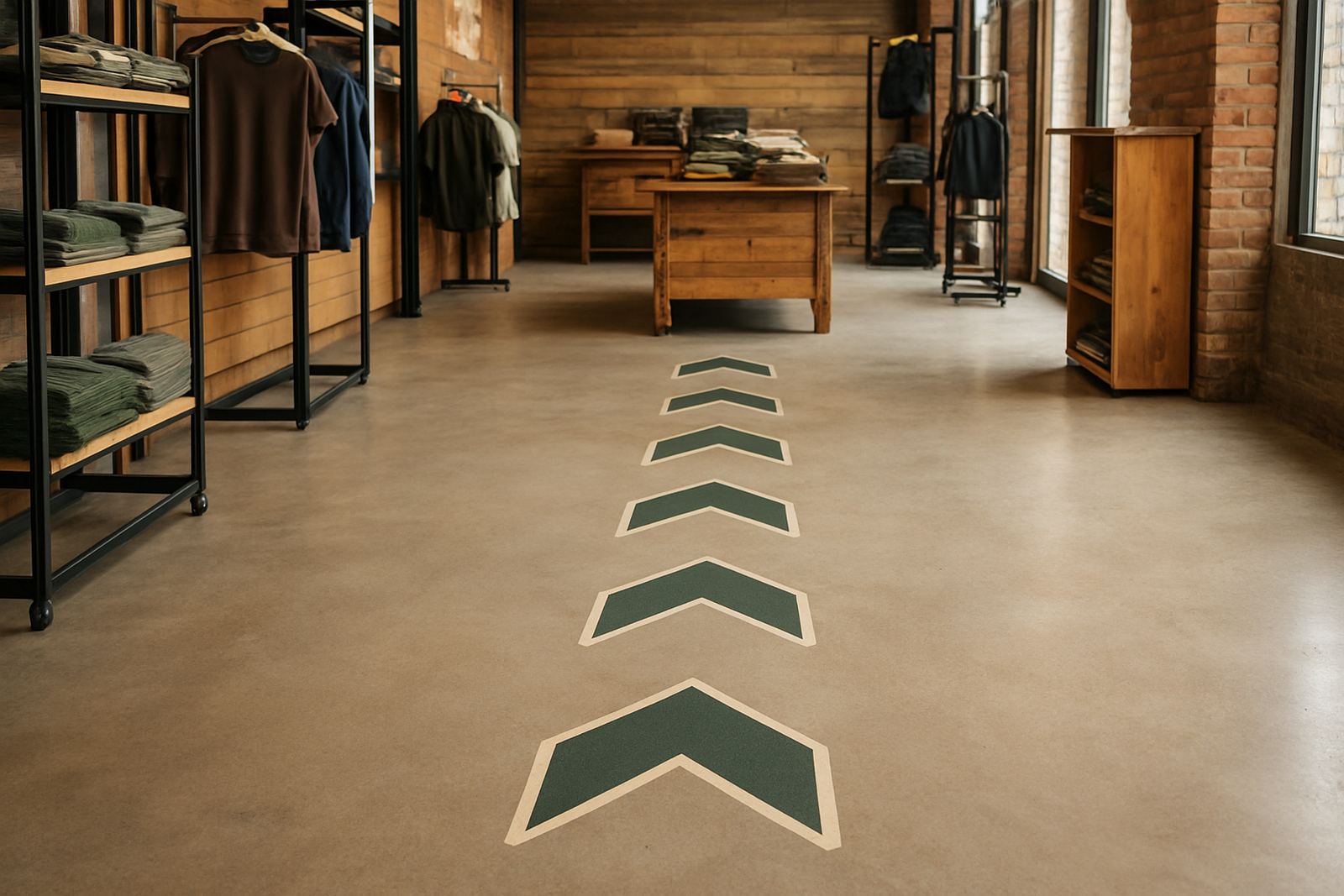
At a busy storefront in Bloemfontein, floor graphics can solve three problems at once: telling people where to queue, showing them where the special offer is and keeping the entrance from clogging up. In one typical setup, a store might use a bright directional decal from the door to the promotion area, then smaller markers near the till to show where to stand. That makes the space feel more orderly and it reduces confusion for staff.
The same idea works for a branch in Thaba Nchu or Botshabelo where customers arrive in waves after school hours or on payday. A clear floor path helps people move quickly and keeps the entrance from becoming a bottleneck. It also gives the business a tidy, planned look even when the shop is under pressure.
When the artwork is consistent with the rest of the signs and window graphics, the whole place feels organised. That matters for first impressions. People notice when a shop knows where to send them, even if they never say it out loud.
When floor graphics are the wrong choice
Not every floor is suitable. If the area is constantly wet, heavily textured or exposed to rough industrial scraping, a decal may not last long enough to justify the spend. Very small rooms can also become too busy if the floor is covered with messages from every side. In those cases, wall signs or window decals may be better.
We also caution against overusing floor graphics for branding alone. Too many messages underfoot can create visual clutter and make the space harder to read. A good rule is to use them where they solve a specific problem, not where they simply add more colour.
If you are not sure whether your site is suitable, a quick site visit usually answers the question. We can assess the traffic pattern, surface condition and maintenance routine, then advise on the best placement and finish. That keeps the job practical, not expensive guesswork.
For most businesses, the value is in usefulness first and decoration second. That is the point of a floor graphic done properly: it works while people walk over it.