
Start With the Footpath, Not the Sign
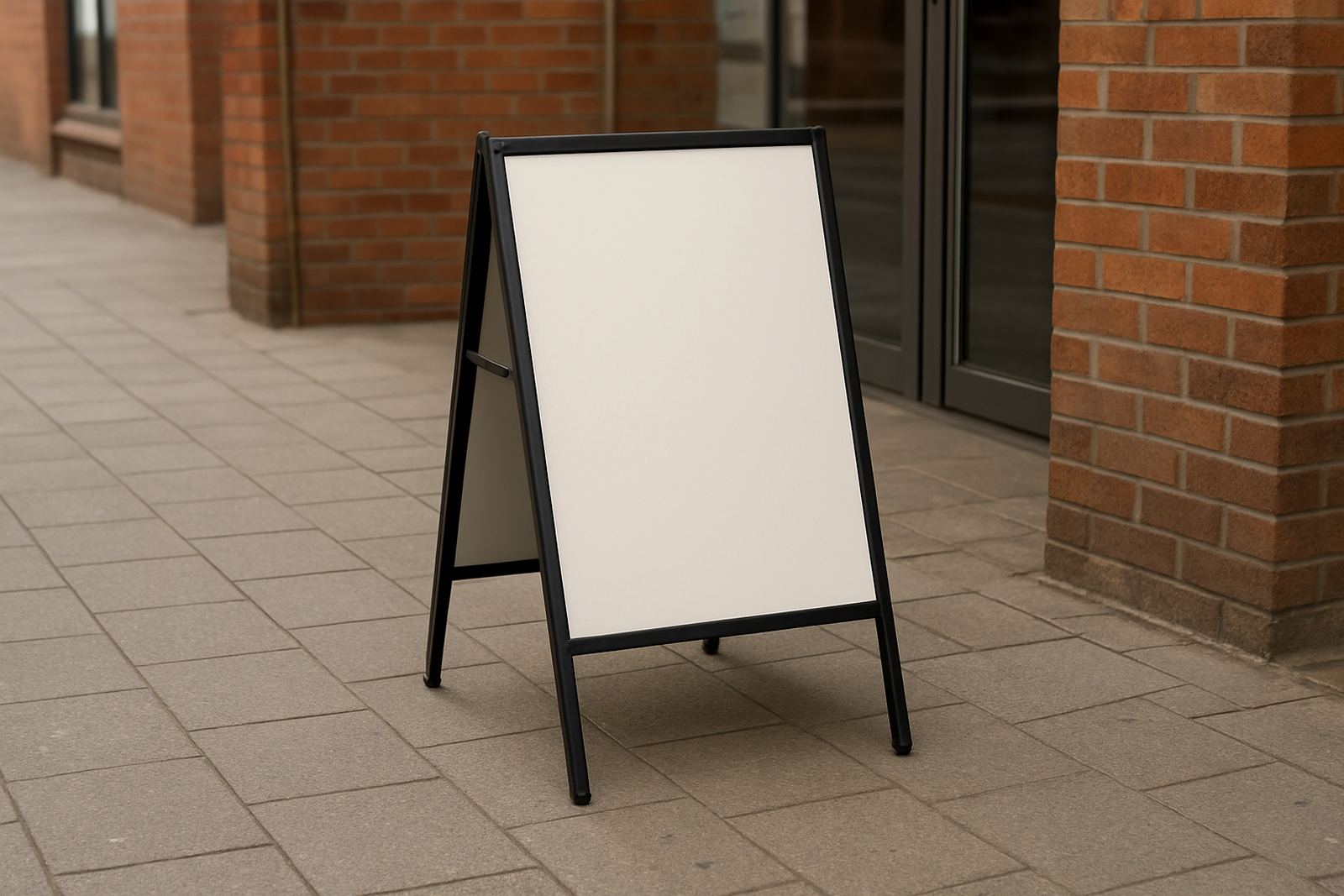
Before you set a moveable sign outside your door, look at the pavement like a pedestrian would. In central Bloemfontein, outside a mall, or along a busier street in Mangaung, the first question is simple: is there enough clear walking space left after the sign is in place? A sign that forces people to step into the road or squeeze past a doorway can become a problem very quickly.
Check the width of the footpath, the slope of the paving and whether the sign will block access for wheelchairs, trolleys or delivery carts. If the entrance sits close to a curb cut, a stormwater grate or a taxi stop, give yourself extra room. A pavement sign should guide people toward the door, not create a bottleneck.
It also helps to think about who uses the site after dark. Some entrances have a cleaner locking up after 6 pm, while others see only a few customers after sunset. If the sign is easy to trip over in low light, it is not positioned well.
Know What the Municipality Will Tolerate
Local rules and property conditions matter more than many business owners expect. In some areas you can place a sign only if it stays entirely within the private property line. In others, the edge of the footpath and the setback from the street can be the deciding factor. If the sign is outside the entrance of a shop in Welkom or Kroonstad, what looks harmless on a quiet morning may become an issue when inspectors, landlords or security staff start asking questions.
Keep these practical checks in mind before the sign goes out:
- Confirm that the sign is on private ground and not in the public walkway.
- Make sure it does not cover fire equipment, access ramps or emergency routes.
- Check with the landlord or centre manager if the building has sign rules.
- Allow for cleaning, refuse collection and after-hours security patrols.
- Remove the sign if high winds or rain make it unsafe.
Municipal enforcement can also be inconsistent from one area to the next, so do not assume that what worked on one street will be allowed on another. A little checking upfront saves a lot of arguing later.
Choose a Base That Can Handle Wind and Wear
Free State weather can be rough on a sign that is too light. Bloemfontein gets gusty days that shift a panel, and summer storms can tip over a weak frame. If the sign is meant to stand outside all day, it needs a stable base, proper weight and a finish that can handle UV exposure. A wobbly sign does not only look untidy, it can knock into customers or scratch paving.
For entrances with polished concrete, tiles or textured paving, the feet of the sign should not leave marks or catch on uneven joints. Where there is coastal humidity? Not here, but dust, sun and sudden rain still take their toll. That means checking the frame joints, screws and joints on a regular basis, not just when the sign first goes out.
- Use a base that will not slide when people brush past it.
- Check the frame for loose fasteners every few weeks.
- Use materials that resist fading and cracking in direct sun.
- Replace damaged panels before they become a safety issue.
If the sign is near a vehicle drop-off point, make sure drivers can see it early enough to avoid it. That matters for estates, clinics and busy retail entrances alike.
Make the Message Clear Enough for One Quick Look
A pavement sign works best when the message is short, readable and direct. People walking past do not stop to study a long paragraph. They glance, decide and move on. For that reason, the type size, colour contrast and layout matter as much as the wording itself. In bright sun, pale copy on a light background disappears. In shade, thin lettering can become hard to read from two or three metres away.
Think about the main job of the sign. Is it pointing to a special offer, showing today’s service, or marking the correct entrance? Keep the message to one action where possible. A sign that tries to say too much can end up saying nothing at all.
Practical content usually includes:
- The business name or a clear service label.
- A short offer or direction, such as entrance here or specials inside.
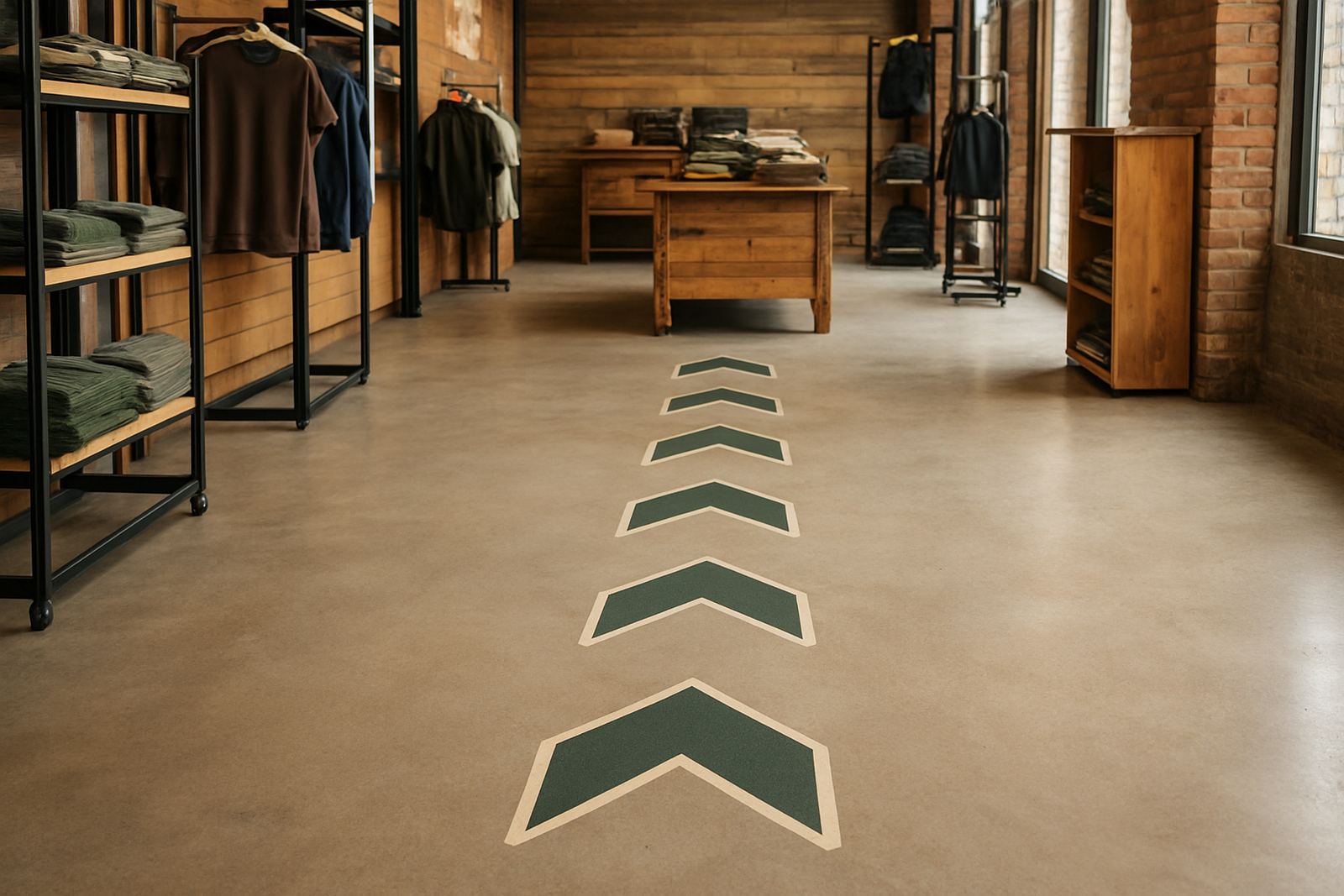
- Arrow direction if people need to turn or walk around the corner.
- Hours only if they are current and easy to keep updated.
When the message changes often, use a format that can be updated without replacing the whole sign. That keeps the setup neat and avoids stale information being left outside for weeks.
Weather, Cleaning and Load-Shedding Days
Outdoor signs are exposed to more than weather. They sit through early-morning cleaning, weekend foot traffic and power cuts that change how a shop is lit. In a load-shedding slot, a sign that relies on nearby lighting can become less effective just when walk-in trade is looking for clues. If the sign is part of the customer route, it should still make sense without any electric assistance.
Rain can also affect how the sign sits on the pavement. On some floors, water pools around the feet and makes a sign tilt or slide. Dust from roads around Hamilton and the wider Bloemfontein area can dull the print faster than expected, so a regular wipe-down helps. If the business has its own cleaner or security team, include the sign in their daily check.
These are worth reviewing at least once a month:
- Is the sign still upright and level?
- Has the print faded or peeled at the edges?
- Are the feet clean and free of grit?
- Does the sign still leave enough walking space?
- Has anything changed at the entrance, like a new ramp or planter?
Small maintenance visits make sense for busy sites because they catch problems before a sign becomes untidy or unsafe.
A Bloemfontein Example: The Right Sign in the Right Spot
Think of a corner shop near a busy road in Bloemfontein, where customers come in from the parking area and from the pavement side. The owner wants a moveable sign outside the entrance to point people toward a lunchtime special. If the sign sits too close to the door, it blocks people carrying parcels. If it sits too far out, it becomes part of the pedestrian path and starts causing trouble.
The better approach is to measure the clear space first, then place the sign where it can be seen from the walkway without crowding the doorway. That might mean using a narrower sign, moving it slightly back from the edge, or changing the angle so it faces approaching foot traffic. The sign can still do its job without becoming an obstacle.
For sites across Mangaung, Botshabelo, Thaba Nchu, Welkom and Kroonstad, the same rule applies: the best pavement sign is the one that works quietly every day. It should guide people, stay put, and leave the entrance clear for customers, staff and emergency access. If it needs constant moving or keeps getting bumped, the setup needs another look.
At Central Signs, pavement signs are treated like part of the entrance system, not a loose extra. The measure, the base, the wording and the placement all need to work together. That is what keeps the sign useful instead of becoming another thing to watch out for.